
How to Clean & Care for Silicone Teethers
By Wendy He – Silicone Baby Product Expert
Updated: Nov 10, 2026
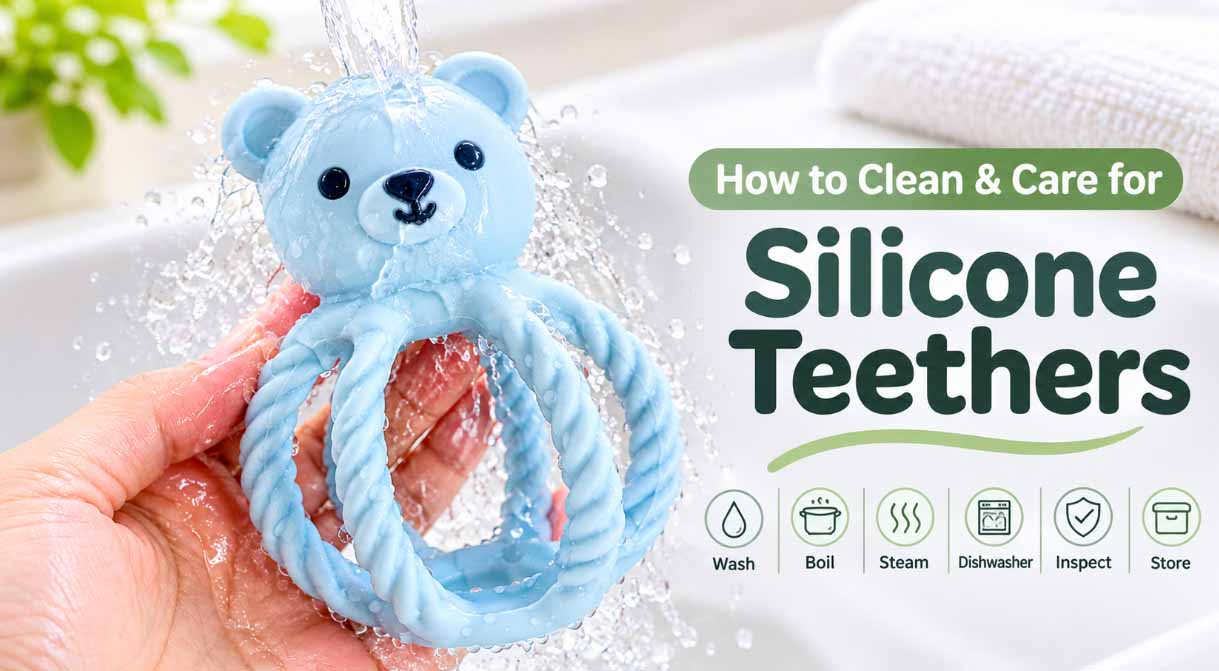
Silicone teethers need regular cleaning and routine inspection. Saliva, milk residue, food particles, and everyday handling can leave deposits on the surface or around product details. The right care method depends on the complete product, so check the manufacturer's instructions before using heat or a cleaning appliance.
Not every teether is designed for boiling, steam treatment, or dishwasher cleaning. Always follow the care instructions supplied for the finished product, including any attached components.
Quick Answer : How Should You Clean a Silicone Teether?
For routine care, wash the teether with mild dish soap and clean water when the manufacturer's instructions permit. Rinse thoroughly, then allow all surfaces and openings to dry completely. Inspect the product regularly and stop using it if you find cracks, tears, loose parts, deformation, or other unexplained changes.
Boiling, steam treatment, and dishwasher cleaning are product-specific options. Use them only when the manufacturer confirms that the complete teether is compatible with the method.
1. Why Proper Cleaning and Care Matter
A teether regularly comes into contact with a baby's mouth, hands, clothing, and other surfaces. Cleaning removes visible residue and everyday dirt. If an additional hygiene treatment is needed, use only a method approved for the specific product. Wash the teether before any additional treatment and follow the manufacturer's instructions.
Care also involves more than cleaning. Repeated chewing, pulling, drops, heat exposure, and contact with other objects can affect a product over time. Routine inspection helps caregivers notice cracks, tears, loose components, sticky areas, or changes in shape that may make a teether unsuitable for continued use.
Cleaning, sanitizing, and sterilizing are not interchangeable terms. Do not describe routine washing or a household treatment as sterilization unless the method and product instructions support that claim.
2. How Often Should You Clean a Silicone Teether?
Clean a silicone teether before its first use and after each use, particularly when it has been dropped, shared, or exposed to food, dirt, or other surfaces. If a teether is used several times throughout the day, clean it between uses rather than returning a soiled product to a baby's mouth.
Clean the teether promptly if saliva or food residue has collected around textured areas, holes, seams, or attached components. Follow the manufacturer's instructions for any additional sanitizing routine, and clean the product again if it becomes contaminated during storage or transport.
A clean storage case does not replace washing. If the teether is dropped on the floor or comes into contact with an unclean surface, clean it before the next use.
3. How to Hand Wash a Silicone Teether
Hand washing with mild dish soap and clean water is a practical everyday method for many silicone teethers. It allows caregivers to pay attention to textured surfaces and small details without exposing the product to unnecessary heat.
1. Wash your hands before handling the product.
2. Rinse the teether under clean, running water to remove loose residue.
3. Apply a small amount of mild dish soap and gently clean the entire surface.
4. Use your fingers or a soft, clean brush to reach textured areas and grooves. Avoid abrasive pads or tools that could damage the surface.
5. Rinse thoroughly until no soap residue remains.
6. Shake off excess water and dry the teether completely before storing or returning it to use.
Pay particular attention to openings, recessed details, and areas where separate components meet. If the product includes wooden, fabric, metal, plastic, or other non-silicone parts, use the care instructions for the complete product rather than assuming that every component can be washed in the same way.
4. Can You Boil a Silicone Teether?
Some silicone teethers are designed to tolerate boiling-water treatment, while others are not. Whether boiling is appropriate depends on the silicone formulation, product construction, attached components, and the manufacturer's validated care instructions.
Do not assume that all products described as silicone are suitable for boiling. Before using this method, check the product label or instructions for an explicit statement that boiling is permitted, including any limits on water temperature and exposure time.
If boiling is approved by the manufacturer, follow the stated procedure exactly. Avoid extending the treatment time or repeating it more frequently than recommended. Allow the teether to cool fully before handling, and inspect it for changes in shape, texture, or structure before the next use.
If the instructions do not mention boiling, choose hand washing or contact the supplier for clarification instead of testing the product with high heat.
5. Can You Steam Sterilize a Silicone Teether?
Steam treatment may be suitable for some silicone teethers, but compatibility is product-specific. Steam sterilizers can expose products to high temperatures and moisture for a defined cycle. A teether with mixed materials, bonded parts, internal structures, or accessories may have different limitations from a simple one-piece silicone design.
Check the manufacturer's instructions before placing a teether in an electric or microwave steam sterilizer. Confirm that both the product and any attached components are approved for the device and cycle being used. Do not rely on the general heat resistance of silicone as proof that a finished product is suitable for steam treatment.
After an approved cycle, handle the teether carefully, allow it to cool, and let any remaining moisture drain or evaporate. Inspect the product before use.
6. Can You Put a Silicone Teether in the Dishwasher?
Some silicone teethers may be dishwasher-safe, but dishwasher compatibility should be confirmed for the specific product. Dishwasher programs vary in temperature, duration, detergent, and drying conditions. Small products may also move around during a cycle or come into contact with heavier items.
Only use a dishwasher when the manufacturer's care instructions explicitly allow it. Follow any guidance on rack placement, cycle selection, and whether the product should be placed in a utensil basket or another secure area. Keep the teether away from sharp objects that could cut or scratch it.
If dishwasher use is not specified, hand washing is the more cautious option. After cleaning, check that the teether is free from detergent residue and completely dry.
7. How to Dry and Store Silicone Teethers
Drying is an essential part of the cleaning process. Water left in holes, recessed details, or enclosed areas can remain after the outer surface appears dry. After washing, shake off excess water and place the teether on a clean drying rack or fresh, clean surface in a well-ventilated area.
Allow all surfaces and openings to dry completely before storage. Avoid sealing a damp teether in an airtight container or bag. Once dry, store it in a clean, dry container or dedicated storage area, away from dust, direct sunlight, excessive heat, and household chemicals.
Keep clean teethers separate from used products, dirty utensils, and items that may transfer residue. When carrying a teether outside the home, use a clean storage case and clean the product again if it is dropped or becomes contaminated.
8. How to Inspect a Silicone Teether for Damage
Cleaning provides a useful opportunity to inspect a teether. Examine the whole product under good lighting, including textured areas, holes, edges, and any points where components are joined.
Check for Visible Wear
Look for cuts, cracks, tears, punctures, deep scratches, or rough edges. Pay attention to areas that receive repeated chewing or pulling. A damaged surface may become harder to clean and may indicate that the product has reached the end of its usable life.
Check the Structure and Components
Look for loose parts, separation, deformation, unusual softness or hardness, and changes in shape. If the teether includes beads, rings, clips, cords, or other attached elements, check that each part remains secure and intact. Do not continue using a product if a component is loose or appears likely to detach.
Check for Changes in the Surface
A persistent sticky or tacky feel, unusual odor, discoloration, or residue that cannot be removed through the recommended cleaning process may indicate a product or material issue. Stop using the teether and contact the manufacturer or supplier if the cause is unclear.
Inspection should not be limited to occasional deep cleaning. A quick visual check before use, combined with more careful examination during routine cleaning, helps identify visible damage earlier. For a broader review of material selection, product construction, and testing considerations, read our guide to silicone teether safety and quality considerations.
9. When Should You Replace a Silicone Teether?
Replace a teether if it is cracked, torn, punctured, badly scratched, deformed, or has loose or detached components. A product should also be taken out of use if it develops a persistent unusual odor, sticky surface, or other unexplained change that remains after proper cleaning.
Do not try to repair a damaged teether with glue, tape, thread, or other household materials. Repairs can introduce additional risks and may not restore the product's original integrity. When in doubt, stop using the product and ask the manufacturer for advice.
There is no single replacement interval that applies to every teether. Actual service life depends on product design, frequency of use, chewing behavior, cleaning conditions, and storage. Follow the manufacturer's recommendations and base replacement decisions on the product's condition.
10. Common Cleaning and Care Mistakes to Avoid
• Using boiling water, steam, or a dishwasher without confirming that the product is compatible.
• Using abrasive scrubbers, sharp tools, or harsh cleaning chemicals that may damage the surface.
• Leaving soap or detergent residue on the teether after washing.
• Storing the product while it is still damp or placing it in a dirty container.
• Ignoring cracks, tears, loose parts, or changes in texture and shape.
• Assuming that every component of a multi-material teether can be cleaned in the same way.
• Continuing to use a damaged product after attempting a household repair.
A simple routine is usually more reliable than an aggressive cleaning method: wash appropriately, rinse thoroughly, dry completely, store cleanly, and inspect regularly.
11. How Product Design Affects Cleaning and Maintenance
Product construction also affects how easily a teether can be cleaned and inspected. For brands and wholesale buyers, cleanability should be considered during product development—not only after mass production.
One-Piece Construction and Accessible Surfaces
A one-piece design can reduce joints and connection points where residue may collect. Smooth, accessible surfaces are generally easier to wash and inspect than narrow gaps or inaccessible cavities. The full shape and surface details still need to be evaluated.
Texture, Openings, and Product Details
Textures can add sensory and chewing features, but deep grooves and narrow recesses may need extra attention during cleaning. Designers should check that caregivers can reach these areas and that water can drain effectively.
Material Combinations and Accessories
Silicone, wood, fabric, metal, plastic, and cords may have different cleaning and heat limitations. Care instructions should explain how to clean the complete product and identify methods that should be avoided.
Evaluate these details before tooling and mass production. Buyers should also assess silicone teether quality before bulk production and understand the silicone teether development and production process, from design and mold making to sampling and manufacturing.
12. Frequently Asked Questions
Do silicone teethers need to be cleaned before first use?
Yes. Clean the teether before its first use, following the manufacturer's instructions. Rinse and dry it thoroughly before giving it to a baby.
Can I use regular dish soap to clean a silicone teether?
Mild dish soap is suitable for routine hand washing for many products. Use a small amount, clean gently, and rinse thoroughly so no soap residue remains. Follow the product-specific care instructions.
Can all silicone teethers be boiled?
No. Boiling suitability depends on the product's material, construction, and attached components. Only boil a teether when the manufacturer explicitly permits it and provides the relevant instructions.
Can silicone teethers go in a steam sterilizer?
Some can, but not all. Check that the complete product is approved for the specific steam sterilization method and cycle before use.
Are silicone teethers dishwasher-safe?
Some products are dishwasher-safe, but this should never be assumed. Use a dishwasher only when the manufacturer's instructions confirm compatibility.
How should I dry a silicone teether after washing?
Shake off excess water and leave the teether on a clean drying rack or surface in a well-ventilated area. Make sure all openings and recessed areas are completely dry before storage.
How do I know when a silicone teether needs to be replaced?
Replace it if you find cracks, tears, punctures, loose parts, deformation, persistent stickiness, or unexplained changes in odor or surface condition. Do not attempt household repairs.
How often should I inspect a silicone teether?
Check it briefly before use and examine it more carefully during routine cleaning. Pay particular attention to areas exposed to repeated chewing, pulling, or bending.
Conclusion
A good silicone teether care routine is straightforward: clean the product regularly, use heat-based methods only when the manufacturer allows them, rinse away all cleaning residue, dry it completely, and inspect it for damage. Product-specific instructions should always take priority over general cleaning advice.
For baby product brands, retailers, and distributors planning to expand their range, explore Melikey's wholesale baby teether designs to compare product styles and discuss customization options for your next collection.
Author Bio
Wendy He is a silicone baby product expert with extensive experience in baby feeding product development and OEM customization solutions. She specializes in food-grade silicone products, infant feeding solutions, and private label baby product manufacturing.
Looking for a Reliable Silicone Teether Manufacturer?
Choosing the right silicone teether involves more than appearance. Material quality, product construction, cleanability, and manufacturing consistency all matter.
At Melikey, we support brands, wholesalers, and distributors with silicone teether wholesale, OEM/ODM customization, and product development services.
Post time: Nov-10-2026