
By Wendy He – Silicone Baby Product Expert
Updated: May 15, 2026
Key Takeaways
-
• Strong suction base is essential to reduce spills and improve self-feeding success
- • Divided plates support balanced nutrition and portion control
- • Plate size should match baby’s feeding stage and appetite growth
- • Food-grade silicone ensures safety, durability, and compliance for long-term use
- • Stage-based selection reduces replacement cost and improves wholesale efficiency
What Should You Look for in a Silicone Baby Plate?
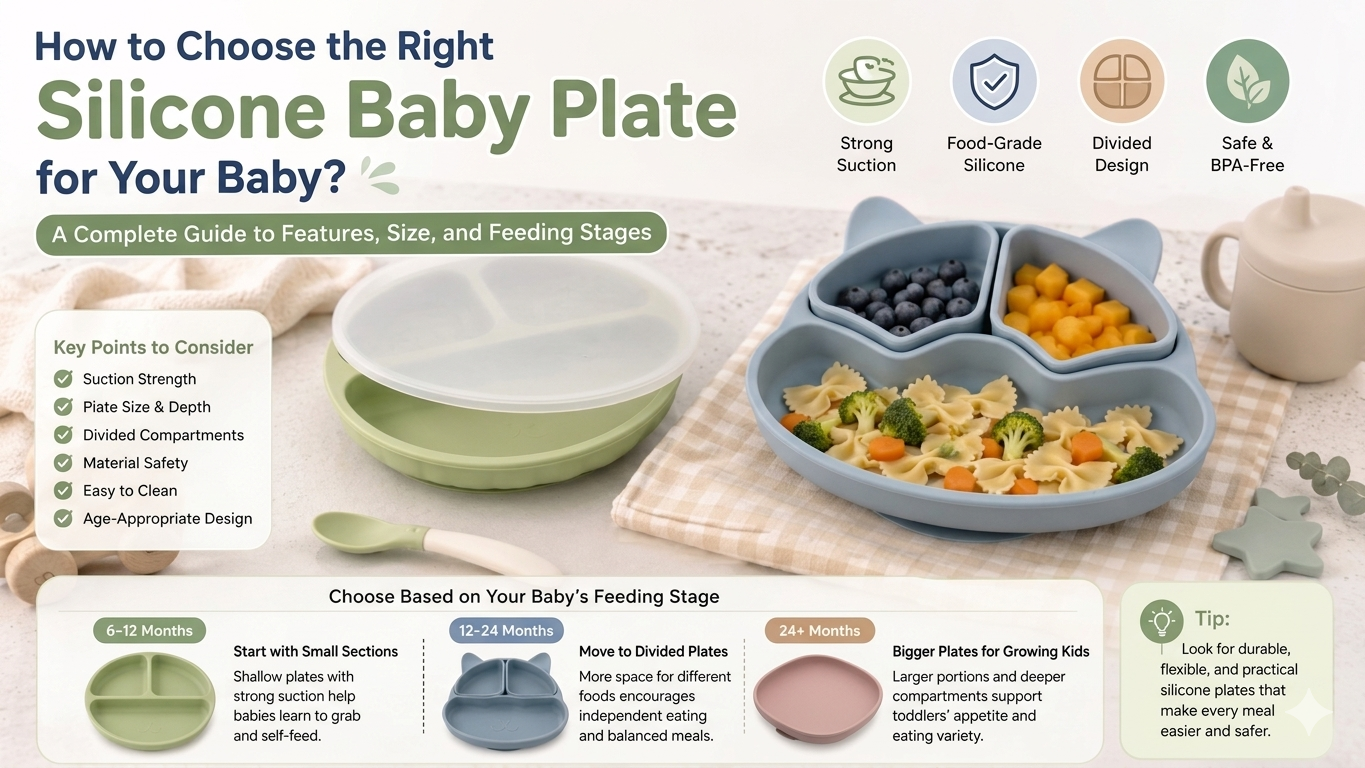
When selecting a silicone baby plate, buyers should focus on five core factors: safety, suction performance, structure design, usability, and durability. For B2B procurement, the most important consideration is whether the product can reduce feeding mess, improve user satisfaction, and maintain stable performance across repeated daily use.
Food-grade certification, heat resistance, and dishwasher safety are baseline requirements. Beyond that, structural design such as compartments and suction base determines real-world usability.
For complete feeding system solutions, explore our strong suction silicone baby feeding solutions
Why Is Suction Strength Important?
Suction strength directly determines whether the plate stays stable during feeding. For self-feeding babies, weak suction leads to frequent spills, food waste, and higher cleaning frequency, which increases caregiver frustration.
A strong suction base:
- • Prevents plate movement on smooth surfaces
- • Supports early independent eating training
- • Reduces product return rate for wholesalers and retailers
From a B2B perspective, suction performance is one of the most important quality control indicators.
How to Choose the Right Plate Size and Shape
Plate size should align with the baby’s feeding stage and portion size. Smaller plates are suitable for early-stage feeding (6–9 months), while larger plates are better for toddlers with higher food intake.
Shape also matters:
- • Round plates: easier for beginners
- • Sectioned plates: better for structured meals
- • Deep plates: reduce food overflow
Choosing the wrong size often leads to underuse or early replacement, increasing procurement costs.
Are Divided Silicone Plates Better?
Divided silicone plates are generally preferred in both home use and retail markets because they allow better portion control and food separation.
Advantages include:
- • Balanced nutrition distribution
- • Avoiding food mixing (important for picky eaters)
- • Better visual food presentation
- • Higher retail demand in global markets
However, for very young babies, a single-compartment plate may still be more practical.
Which Silicone Plate Features Matter Most?
For wholesale buyers and distributors, the most valuable features include:
- • High-grade food silicone material
- • Strong, reusable suction base
- • Heat resistance (microwave & dishwasher safe)
- • Anti-slip design
- • Easy cleaning structure
Among these, durability and cleaning efficiency have the highest impact on customer satisfaction and long-term repeat purchases.
Best Silicone Plate Types for Different Feeding Stages
Different feeding stages require different plate designs:
- • 6–9 months: small suction plates for puree introduction
- • 9–12 months: divided plates for mixed food introduction
- • 12+ months: larger plates for independent feeding
Matching the plate to the feeding stage significantly improves usability and reduces product mismatch in wholesale distribution.
See full category system here: age-based baby feeding silicone solutions
Which Silicone Plate Design Works Best for Different Feeding Situations?
Different usage scenarios require different design priorities:
- • Home feeding: suction + divided structure preferred
- • Travel use: lightweight and compact design
- • Daycare use: durable and easy-to-clean structure
For B2B buyers, scenario-based product selection helps expand product coverage across multiple distribution channels.
For customization and OEM development: custom silicone baby tableware for B2B buyers
Frequently Asked Questions About Choosing Silicone Baby Plates
What is the safest material for baby plates?
Food-grade silicone is widely considered the safest due to its heat resistance, flexibility, and non-toxic properties. It does not release harmful substances even under high temperature, making it suitable for daily feeding use.
Are suction plates really necessary?
Yes. Suction plates are highly recommended for self-feeding babies because they prevent tipping and reduce spills. This improves feeding efficiency and reduces cleaning workload for caregivers.
What age can babies use silicone plates?
Most babies can start using silicone plates from around 6 months when solid foods are introduced. The plate type should be adjusted as the baby grows.
How do I clean silicone baby plates?
Silicone plates are typically dishwasher safe and can also be sterilized using boiling water or steam sterilizers, making them suitable for repeated hygienic use.
Are divided plates better than non-divided plates?
Divided plates are better for portion control and balanced meals, especially for toddlers. However, non-divided plates may be more suitable for early-stage feeding when food variety is limited.
What features matter most for wholesale buyers?
For B2B buyers, durability, suction strength, material safety, and ease of cleaning are the most important features, as they directly affect product return rate and customer satisfaction.
Author Bio
Wendy He is a silicone baby product expert with extensive experience in baby feeding product development and OEM customization solutions. She specializes in food-grade silicone products, infant feeding solutions, and private label baby product manufacturing.
If you are in business,You may like
We offer more products and OEM service, welcome to send inquiry to us
Post time: May-15-2026