
By Wendy He – Silicone Baby Product Expert
Updated: Nov 19, 2026
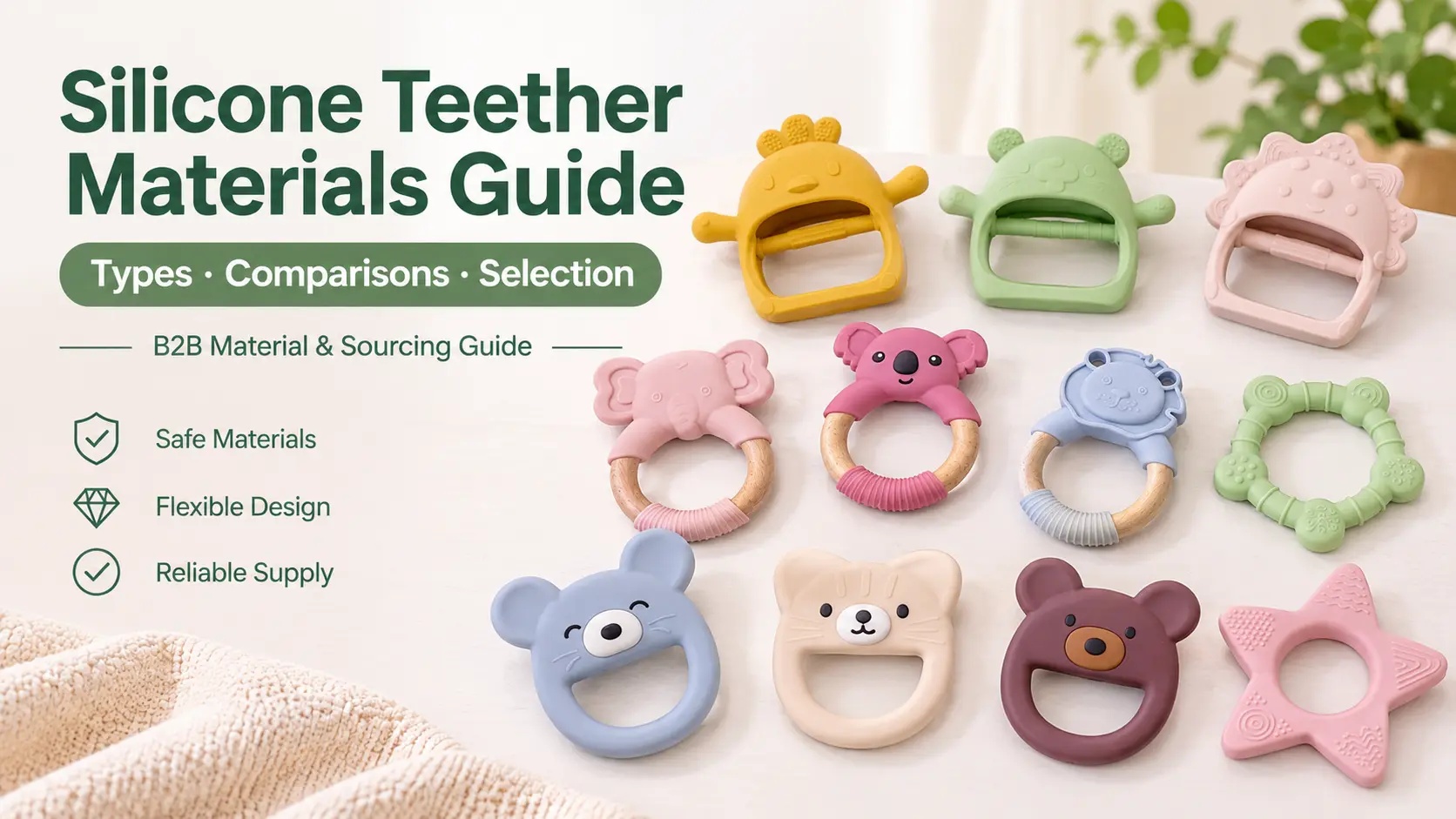
Choosing the right material is one of the earliest decisions in developing a baby teether. It influences the product’s feel, flexibility, shape, surface finish, manufacturing process, care instructions and the evidence buyers need before placing a bulk order.
For baby brands, wholesalers and product developers, material selection should go beyond a simple “silicone or natural” comparison. The exact formulation, manufacturing controls, finished-product design and destination-market requirements all matter. This guide compares the materials commonly used in teethers, explains key silicone terminology and outlines practical checks for sourcing a custom teether.
Quick Take:
Silicone, natural rubber and wood each have different design and sourcing considerations. “Food-grade,” “medical-grade” and “BPA-free” describe different aspects of a material or product and should not be treated as interchangeable proof of finished-product safety.
1. Common Materials Used in Baby Teethers
Baby teethers are made from several material families. The right option depends on the intended product design, tactile experience, target market, care requirements and the manufacturer’s ability to control material quality.
Silicone
Silicone rubber is widely used for teethers because it can be molded into a broad range of shapes, textures and integrated structures. Depending on the formulation and design, it can provide a soft, flexible or relatively firm feel. It also supports a wide range of colors and detailed surface features, making it suitable for animal shapes, rings, textured teethers and other custom designs.
For B2B sourcing, “silicone” alone is not a complete material specification. Buyers should confirm the material grade and formulation intended for the product, the relevant compliance documentation, the curing and production controls, and whether the tested sample represents the production material.
Natural Rubber
Natural rubber is an elastomer obtained from latex, typically sourced from rubber trees. It is used in some baby products because of its elastic feel and distinctive material characteristics. Its properties can vary with the rubber compound, additives, processing and product construction.
Buyers considering natural rubber should ask about the exact compound, potential latex-related considerations, odor and aging controls, surface condition, cleaning guidance and the testing applicable to the finished product. “Natural” describes the material’s origin; it does not by itself establish regulatory compliance or product safety.
Wood
Wooden teethers offer a firm, rigid tactile experience and a natural visual appearance. Common product designs may use shaped wooden elements, beads or wooden components combined with another material. Wood species, grain, moisture content, machining, sanding and any applied finish can all affect the finished product.
For wooden components, buyers should review the wood species and sourcing information, surface smoothness, splinter control, moisture management, coatings or oils, and relevant chemical and mechanical test evidence. A natural appearance should not be used as a substitute for material and finish verification.
Combination-Material Teethers
Some designs combine materials—for example, silicone elements with wooden beads or rings. These products can create visual and tactile contrast, but every component and connection introduces additional considerations. Buyers should evaluate the materials individually as well as the complete assembly, including cord or attachment strength, component retention, foreseeable use and cleaning instructions.
A combination product should be assessed as a finished item. Documentation for one component does not automatically establish compliance of the assembled teether.
2. Different Types of Silicone Materials Used in Teethers
Silicone teethers may be produced using different silicone rubber systems and molding processes. Two common manufacturing routes are solid silicone rubber molding and liquid silicone rubber (LSR) molding. These are process and material-system distinctions—not a simple ranking from lower to higher quality.
Solid Silicone Rubber
Solid silicone rubber is supplied as a compound with a putty-like or gum-like consistency and is commonly processed through compression molding or related molding methods. The compound is placed into a mold and cured under controlled heat and pressure.
This route can be suitable for a range of solid molded teether shapes, textures and product structures. The final result depends on the compound, mold design, processing parameters, operator controls and post-curing or finishing steps where applicable.
Liquid Silicone Rubber (LSR)
Liquid silicone rubber is a two-component material system that is metered, mixed and injected into a closed mold, where it is cured. LSR processing is associated with automated injection molding and can support repeatable production of suitable geometries when the tooling and process are properly engineered.
LSR may be considered for designs requiring fine detail, controlled part dimensions or high-volume automated production. However, it is not automatically superior to solid silicone rubber. The correct choice depends on the product design, material specification, tooling investment, production volume, cost target and validation requirements.
Solid Silicone Rubber vs. LSR
|
Consideration |
Solid Silicone Rubber |
Liquid Silicone Rubber (LSR) |
|
Material form |
Pre-compounded solid/gum-like material |
Two-component liquid system |
|
Typical molding route |
Often compression molding |
Injection molding |
|
Production setup |
Depends on mold design and process; may suit varied product runs |
Requires suitable metering, mixing and injection equipment |
|
Design suitability |
Broad range of molded shapes and textures |
Can suit precise, repeatable molded geometries and fine details |
|
Selection factors |
Compound properties, mold, cycle and finishing |
Material system, tooling, injection parameters and automation |
|
Quality considerations |
Cure, flash, bubbles, dimensions and surface finish |
Mix ratio, metering, cure, flash, dimensions and surface finish |
A buyer should compare actual material specifications and sample performance rather than selecting a process based on its name. Ask the manufacturer to explain why the proposed material and molding route fit the product geometry and expected order volume.
Silicone Formulation and Hardness (Shore A)
Silicone hardness is commonly described using the Shore A scale. It is one useful specification for communicating the relative indentation hardness of an elastomer, but it does not describe every aspect of how a teether feels or performs. Thickness, geometry, wall structure, texture, cure state and the material’s elastic properties also influence the finished product.
A lower Shore A value generally indicates a softer material, while a higher value indicates a firmer material. There is no universal Shore A value that is suitable for every teether. The target should be established through design requirements, sample evaluation and applicable safety testing.
• Define the intended tactile feel and product function before specifying hardness.
• Confirm the test method, test conditions and tolerance used for the hardness specification.
• Evaluate the complete molded part—not only a flat material coupon—because shape and thickness affect perceived flexibility.
• Check hardness consistency across samples and production batches.
3. Food-Grade vs. Medical-Grade Silicone: What’s the Difference?
“Food-grade silicone” and “medical-grade silicone” are often used in supplier descriptions, but neither phrase should be treated as a universal quality ranking. The relevant question is whether the specific material formulation and finished product meet the requirements applicable to their intended use and destination market.
What Does Food-Grade Silicone Mean?
Food-grade is a commonly used commercial description for silicone intended for specified food-contact applications. In practice, buyers need to identify the applicable food-contact framework and verify that the material formulation, colorants, processing aids and finished article are covered by appropriate supporting evidence for the intended conditions of use.
For the United States, FDA food-contact status is not established simply by a supplier calling a material “FDA approved.” FDA explains that the regulatory status of a food-contact article depends on the status of its individual components and the conditions of use. Buyers should request the specific regulatory basis or supporting documentation relevant to the material and application. See the FDA guidance on determining the regulatory status of food-contact material components.
A food-contact claim should therefore be supported by documentation that identifies the material or formulation, the applicable regulation or authorization, and the intended conditions of use. A generic certificate or an unrelated test report is not enough.
What Does Medical-Grade Silicone Mean?
Medical-grade silicone is a broad industry term used for silicone materials developed or selected for particular medical or healthcare applications. Requirements can vary significantly depending on whether a material is intended for short-term skin contact, prolonged contact, implantation or another specific use.
Medical-device evaluation may involve biological evaluation, manufacturing controls, traceability and application-specific risk management. A “medical-grade” label does not automatically establish that a silicone teether complies with children’s product regulations, food-contact requirements or finished-toy safety standards. Unless a teether project has a defined medical application, buyers should focus on the relevant children’s product and material requirements rather than assuming medical-grade is necessary.
What Does BPA-Free Mean for Silicone Teethers?
BPA stands for bisphenol A, a chemical used in the manufacture of certain materials, including some polycarbonate plastics and epoxy resins. BPA-free means that a product or material is represented as not containing BPA, or as meeting a defined limit under a stated test method. Buyers should clarify exactly what the claim covers: the base silicone compound, colored material, accessory components, or the complete finished product.
BPA-free is a specific substance-related declaration. It is not the same as food-contact compliance and does not demonstrate that a finished teether has passed all applicable mechanical, physical or chemical safety tests. A BPA-free statement should be supported by a clear material declaration and, where required by the buyer or market, relevant test evidence tied to the correct sample and product specification.
The U.S. FDA’s background information explains that BPA is used in certain food-contact materials, including some polycarbonate plastics and can coatings. The fact that a product is silicone does not remove the need to verify the complete formulation and any additional components. See the FDA overview of BPA .
Food-Grade, Medical-Grade and BPA-Free: Three Different Concepts
|
Term |
What it generally describes |
What buyers should verify |
|
Food-grade |
Suitability for specified food-contact applications under a relevant framework |
Applicable regulation or authorization, formulation, conditions of use and supporting evidence |
|
Medical-grade |
Material selected or evaluated for a defined medical or healthcare application |
Specific medical application, applicable biological evaluation and quality requirements |
|
BPA-free |
A declaration concerning the presence or level of one particular chemical |
Scope of declaration, test method, detection/quantification limit where relevant, and sample identity |
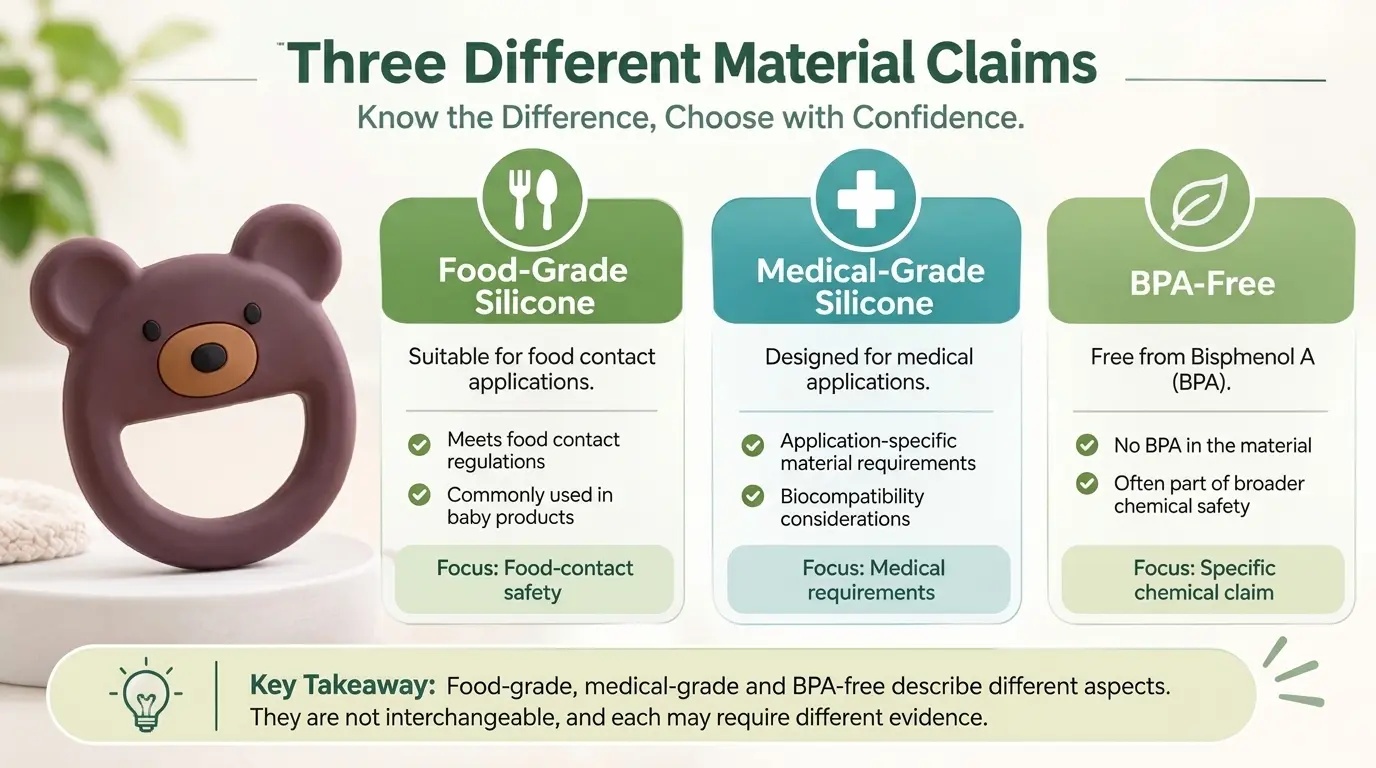
Keep three evidence categories separate when reviewing a supplier file:
• BPA-free declaration: addresses a specific chemical claim.
• Food-contact compliance: addresses whether the material or article meets the relevant food-contact requirements for its intended conditions of use.
• Finished-product safety testing: addresses applicable requirements for the complete teether, including relevant mechanical, physical and chemical hazards.
One category cannot be used as a substitute for the others. For example, a BPA-free report does not prove that a teether meets the applicable toy safety standard.
4. Silicone vs. Natural Rubber vs. Wood Teethers
The most suitable material depends on the product concept and the evidence required for the target market. The comparison below is intended as a sourcing guide, not a universal performance ranking.
|
Factor |
Silicone |
Natural Rubber |
Wood |
|
Material origin |
Synthetic elastomer based on silicone polymers |
Elastomer derived from natural latex |
Natural solid material; properties vary by species and grade |
|
Feel and flexibility |
Can range from soft to firm depending on formulation and design |
Elastic feel; depends on compound and processing |
Rigid; little inherent flexibility |
|
Shape and detail |
Well suited to molded shapes, integrated features and textures |
Can be molded; design depends on compound and process |
Machined, carved or shaped; fine molded detail is not typical |
|
Color options |
Broad range of color options, subject to pigment and formulation controls |
Often more limited or dependent on compound and coloring approach |
Natural appearance or applied finish; coating suitability must be assessed |
|
Surface considerations |
Flash, bubbles, incomplete cure, tears and surface finish |
Surface condition, odor, aging and compound consistency |
Sanding, splinters, grain, cracks, moisture and finish |
|
Care considerations |
Care instructions depend on formulation and product design; validate cleaning guidance |
Follow material- and product-specific care instructions |
Moisture exposure and finish may limit cleaning methods |
|
B2B checks |
Material identity, hardness, cure, color consistency and test reports |
Latex/compound information, aging, odor and testing |
Wood species, finish, moisture, surface quality and component retention |
Do not assume that one material is inherently safer, more hygienic or more durable in every application. Those outcomes depend on the formulation, construction, manufacturing quality, use conditions and maintenance instructions. Buyers should assess the actual product and its supporting evidence.
5. How Material Affects Teether Design and Manufacturing
Material selection and product design should be developed together. A design that works well in one material may need structural or tooling changes when produced in another.
Hardness, Thickness and Structure
Hardness influences the material’s resistance to indentation, but the part’s geometry also determines its flexibility. Thin sections may bend more easily than thick sections made from the same compound. Openings, ribs, handles and connecting sections can create stress concentration points that should be considered during design review.
For a custom project, define the intended feel, dimensions, thickness ranges and functional features. Review these requirements through prototypes and physical evaluation rather than relying on a Shore A value alone.
Surface Texture and Mold Detail
Raised patterns, grooves, rounded edges and textured zones can create different tactile experiences. The mold must reproduce these details consistently while allowing the part to release cleanly. Very deep or narrow features may complicate demolding, cleaning or inspection, so texture design should be reviewed with the manufacturing team.
Color and Batch Consistency
Silicone products can be produced in a wide range of colors, but color customization requires control of pigments, material batches, mixing and curing conditions. Buyers should approve a physical color sample or defined color reference and establish acceptable tolerances before mass production.
For repeat orders, retain approved samples and record the material and color specifications. If a formulation, pigment or supplier changes, assess whether additional validation or testing is needed.
Mold Development and Molding Process
Mold design affects parting lines, flash, dimensional accuracy, surface finish and production efficiency. The choice between solid silicone rubber molding and LSR injection molding should be based on the design, target volume, tooling cost and process capability. Sampling should confirm that the intended geometry can be produced consistently.
Quality Control During Production
A practical quality plan may include checks for:
• Visual defects such as bubbles, contamination, uneven color, flash and surface marks.
• Dimensional conformity and critical feature measurements.
• Hardness and consistency against the approved specification.
• Tearing, deformation or weak points in relevant product structures.
• Curing and process records, where applicable to the material and production route.
• Component retention and assembly strength for multi-part products.
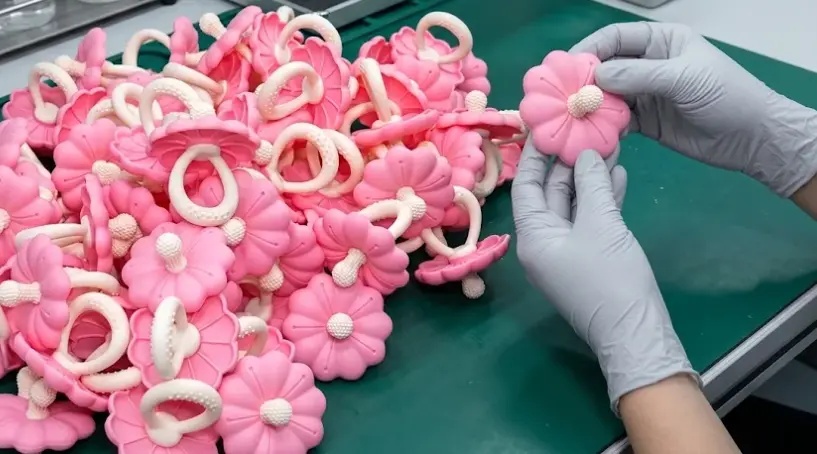
These manufacturing checks support process consistency, but they do not replace the regulatory testing required for the finished product. For a deeper supplier-side checklist, see Melikey’s guide to silicone teether quality evaluation.
6. What B2B Buyers Should Check When Selecting Teether Materials
Before approving a material or placing a bulk order, buyers should align the product specification, documentation and test plan. Requirements depend on the product’s intended age, function, construction and destination market.
Material Specification and Traceability
Request a material specification that identifies the material type, grade or formulation reference, supplier or manufacturer, relevant hardness range, colorant information and any processing or curing requirements that affect the finished part. Ask how material batches are identified and traced through production.
Chemical Composition and Material Declarations
Buyers commonly request declarations relating to BPA, PVC and phthalates. These declarations should be specific about their scope and supported by appropriate evidence when required. Do not assume that every declaration is a universal legal requirement for every silicone teether; the relevant chemical restrictions and test methods depend on the destination market, product composition and applicable rules.
Check that any chemical test report identifies the tested sample, material or component, test method, results and laboratory. Confirm that the report matches the current formulation, color and product construction. A report for a different color, supplier, material grade or previous design may not represent the product being purchased.
Applicable Market Requirements and Finished-Product Testing
For the United States, products designed or intended primarily for children 12 years old or younger may be subject to children’s product requirements, including applicable provisions of ASTM F963 as incorporated by 16 CFR part 1250, as well as other rules relevant to the product. CPSC identifies section 4.22 of ASTM F963 for teethers and teething toys. The applicable test plan must be determined for the specific product; do not assume that a single material certificate covers every requirement. See the CPSC ASTM F963 requirements chart and CPSC toy safety guidance .
For the European Union, toys are subject to applicable toy safety requirements and conformity assessment. Regulation (EU) 2025/2509 on toy safety entered into force on 1 January 2026 and is scheduled to apply from 1 August 2030, following a transition period. Until the new Regulation applies, the existing framework remains relevant. Buyers planning long-term product launches should monitor the transition and confirm the rules applicable at the time the product is placed on the market. See the European Commission toy safety page.
A laboratory report, a declaration of conformity, a CE marking and a Children’s Product Certificate (CPC) serve different roles. For U.S. children’s products subject to applicable rules, the responsible domestic manufacturer or importer is responsible for certification and the CPC. A supplier’s test report may support that process, but it does not automatically replace the responsible party’s legal obligations.
Physical and Mechanical Performance
Review the complete product for foreseeable mechanical hazards, including detachable components, openings, cords or loops, edges, projections, structural weaknesses and small parts where relevant. The applicable evaluation depends on the intended age group and product design. Material selection alone cannot resolve a design-related hazard.
Color, Sample and Production Consistency
Approve a pre-production sample that reflects the intended material, pigment, mold, assembly and finish. Define acceptance criteria for color, dimensions, hardness and visible defects. For repeat orders, use retained reference samples and change-control procedures so that substitutions are not made without review.
Supplier Manufacturing Capability
Assess whether the supplier can support the full development and production process, including design review, prototyping, mold development, material sourcing, process control, inspection, testing coordination, packaging and shipment. Ask for a clear explanation of how sample approval is transferred into mass production.
For additional safety-related sourcing considerations, review the silicone teether safety guide.
7. Choosing the Right Material for Your Custom Teether Project
A reliable custom teether project starts with the intended product function and market requirements—not with a material label alone. A structured development process helps reduce avoidable changes after tooling or bulk production begins.
Define the product concept. Confirm the target age range, intended use, product dimensions, tactile goals, design language and destination markets.
Select the material system. Compare silicone, natural rubber, wood or a combination design against the required feel, shape, color, care instructions, manufacturing process and compliance evidence.
Confirm the technical specification. Set material identity, hardness range where relevant, dimensions, color reference, surface requirements and component details.
Develop and evaluate samples. Review the prototype for appearance, feel, dimensions, usability, assembly and potential design risks. Adjust the design before final tooling approval.
Plan testing and documentation. Identify applicable market requirements and agree which samples, components and finished-product configurations need evaluation.
Approve mass-production controls. Establish material-batch traceability, inspection criteria, approved samples and a change-control process for materials, colors, molds and components.
Melikey supports custom silicone baby teether projects through product design coordination, color customization, mold development, sampling and bulk manufacturing. Buyers can discuss the product concept, target specifications and project requirements with the team before confirming the production route. Explore Melikey’s custom teether manufacturing process or browse available silicone baby teether designs.
8. Frequently Asked Questions
1. What is the best material for baby teethers?
There is no single best material for every teether. Silicone, natural rubber and wood have different physical properties, design possibilities and sourcing requirements. The right choice depends on the product design, intended use, target market, manufacturing controls and evidence of compliance for the finished product.
2. Is food-grade silicone suitable for baby teethers?
A silicone formulation intended for food-contact use may be a candidate material, but the phrase “food-grade” alone does not establish that a finished teether meets all applicable children’s product safety requirements. Buyers should verify the relevant food-contact basis and assess the finished product against the rules that apply in its destination market.
3. What is the difference between food-grade and medical-grade silicone?
Food-grade generally refers to suitability for specified food-contact applications, while medical-grade is a broad term associated with materials selected or evaluated for defined medical uses. The requirements are different and application-specific. Neither term automatically proves that a baby teether complies with toy safety requirements.
4. Are silicone teethers BPA-free?
BPA-free is a claim about a specific chemical, not a complete safety certification. Buyers should request a declaration that clearly identifies the material or product covered and supporting test evidence where appropriate. They should also review food-contact documentation and finished-product safety testing separately.
5. Are silicone teethers better than natural rubber teethers?
Not in every situation. Silicone offers broad options for molded shapes, textures and colors, while natural rubber has a different elastic feel and material profile. Buyers should compare the actual compound, design, manufacturing controls, care guidance and applicable test evidence rather than relying on a general ranking.
6. Are wooden teethers safe for babies?
Wooden teethers require careful control of wood species, machining, sanding, surface condition, finishes and component retention. Buyers should review the finished product for splinters, cracks, coatings and mechanical risks, and verify the testing and documentation required for the target market. “Natural wood” by itself is not proof of compliance.
7. What silicone hardness is suitable for baby teethers?
There is no universal Shore A hardness for all teether designs. The appropriate specification depends on the intended feel, geometry, thickness, structure and performance requirements. It should be confirmed through prototype evaluation and applicable finished-product assessment.
8. Can silicone teether colors be customized?
Yes. Silicone teether colors can generally be customized through controlled pigment selection and production. Buyers should approve a physical color sample or defined color reference, specify acceptable variation and confirm that the colorant and finished product are covered by the relevant documentation and testing.
9. What should B2B buyers request from a silicone teether manufacturer?
Request a clear material specification, relevant declarations and test reports, sample-to-report traceability, product drawings or specifications, quality-control criteria, batch identification and details of the manufacturing and change-control process. Also agree on the applicable finished-product test plan for the destination market.
Develop Your Custom Silicone Teether with Melikey
Selecting the right material is only one part of building a successful teether product. Design details, material specifications, mold development, sample evaluation, production controls and market-specific testing all need to work together.
Melikey works with baby brands, wholesalers and product developers on custom silicone teether projects, including design coordination, color options, mold development, sampling and bulk production. Share your product concept and target requirements to discuss a suitable development and manufacturing plan.
Author Bio
Wendy He is a silicone baby product expert with extensive experience in baby feeding product development and OEM customization solutions. She specializes in food-grade silicone products, infant feeding solutions, and private label baby product manufacturing.
If you are in business,You may like
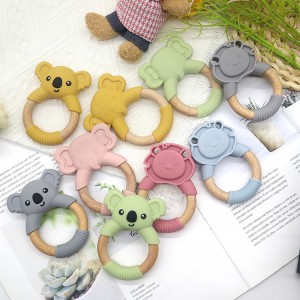
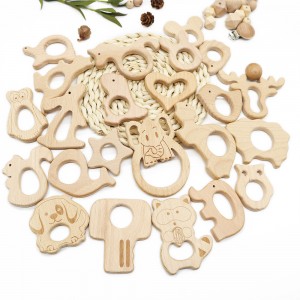
Looking for a Reliable Silicone Teether Manufacturer?
Choosing the right silicone teether involves more than appearance. Material quality, product construction, cleanability, and manufacturing consistency all matter.
At Melikey, we support brands, wholesalers, and distributors with silicone teether wholesale, OEM/ODM customization, and product development services.
Post time: Nov-19-2026