
By Wendy He – Silicone Baby Product Expert
Updated: Sep 29, 2026
Quick Answer
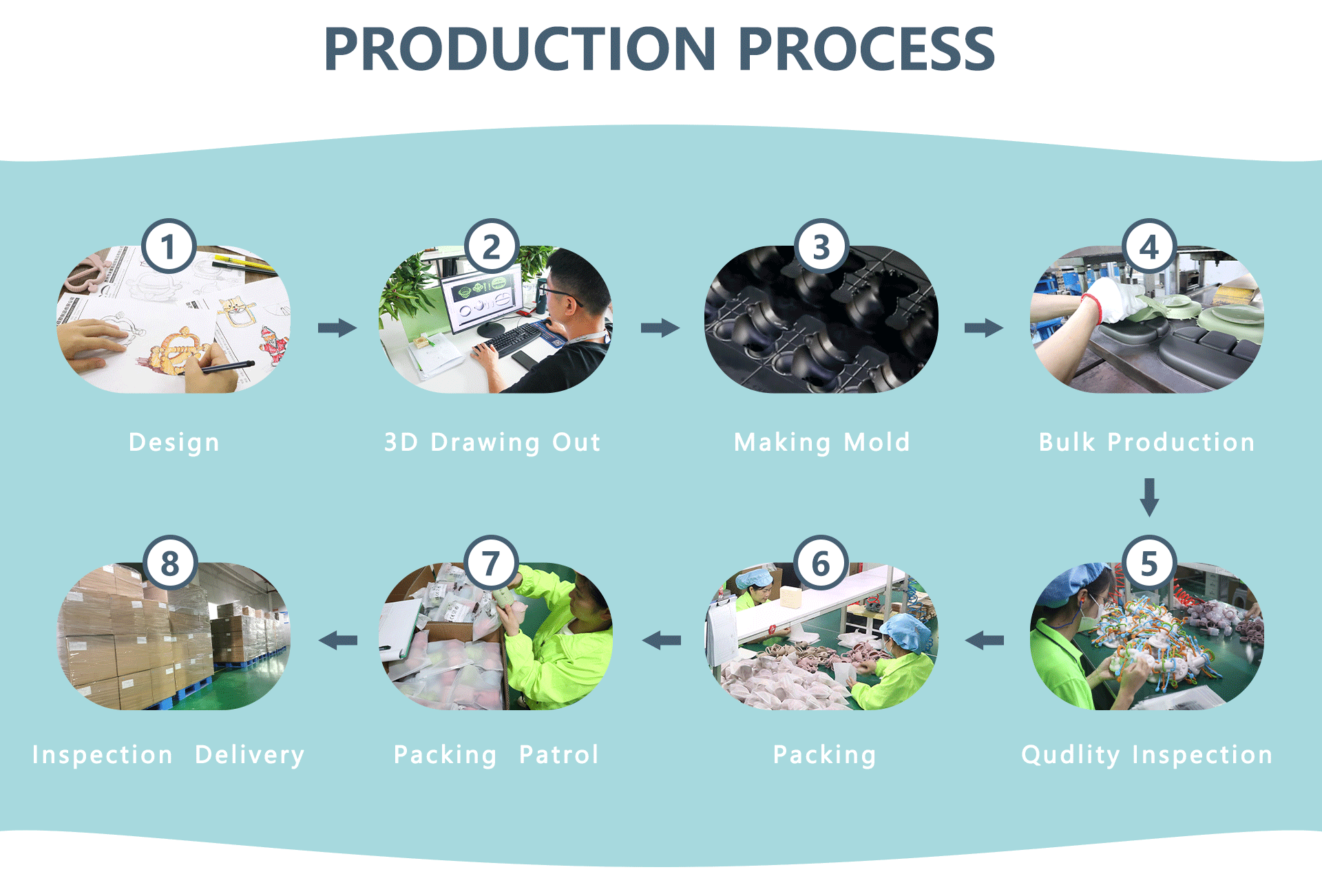
A custom silicone teether is more than a shape pressed into a mold. For a baby product brand, successful development requires coordination between product concept, 3D design, mold development, silicone material, structural details, sampling, testing, production, quality control, and packaging.
At Melikey, we support the process from initial idea to mass production, helping brands turn sketches, reference products, or original concepts into customized silicone teethers for their product lines.
The typical development process is:
Concept → Product Design → 3D Model → Mold Development → Prototype → Sample Review → Testing & QC → Mass Production → Packaging & Delivery
1. What Does It Take to Develop a Custom Silicone Teether?
A teether may look simple from the outside, but several decisions need to be made before production begins.
For a custom silicone teether, a buyer may need to determine:
- • Overall shape and dimensions
- • Grip and handling structure
- • Surface texture and chewing areas
- • Silicone material requirements
- • Color and color matching
- • Logo or branding method
- • Mold structure
- • Packaging format
- • Testing and compliance requirements
- • Target market and intended age range
- • Production quantity and SKU requirements
For an existing product, the process may start with a reference sample.
For a completely new product, it may begin with something much simpler:
A sketch, a product idea, a mood board, or even a rough description.
This is where an experienced OEM/ODM manufacturer can make a significant difference. The goal is not simply to reproduce a shape, but to turn a concept into a product that can be developed, sampled, manufactured, inspected, and packaged consistently.
Melikey develops custom silicone baby teethers for baby brands, wholesalers and product companies, covering different shapes, structures, textures and functional designs.
2. Step 1: Define the Product Concept
Every custom project starts with a product concept.
A brand may already have a clear design, or it may only know the market direction it wants to develop.
For example:
- • An animal-shaped teether for a baby lifestyle brand
- • A ring teether with a specific grip structure
- • A lightweight openwork teether
- • A textured teether designed for different chewing surfaces
- • A teether combined with a rattle or sensory feature
- • A custom shape based on a brand's own character or design language
At this stage, Melikey first needs to understand what the product is supposed to achieve.
Information that helps us evaluate a new concept
| Project Detail | Why It Matters |
|---|---|
| Product concept | Defines the overall development direction |
| Target market | Influences safety and compliance requirements |
| Intended age range | Helps determine appropriate dimensions and structure |
| Product dimensions | Affects material usage and mold design |
| Shape and texture | Influences both function and manufacturability |
| Color requirements | Determines color matching and production planning |
| Logo requirements | Determines the appropriate branding method |
| Packaging | Affects final product presentation and packing process |
| Estimated order quantity | Helps with production and cost planning |
The earlier these requirements are clarified, the fewer changes are likely to be needed later.
3. Step 2: Turn the Idea Into a Product Design
Once the concept is clear, the next step is product design.
For a custom teether, this can include:
- • Shape refinement
- • Dimension adjustment
- • Thickness adjustment
- • Grip design
- • Texture placement
- • Hole or opening design
- • Logo placement
- • Edge treatment
- • Connection or structural details
- • Overall visual balance
This is where a product idea begins to become a manufacturable design.
For example, a brand may provide a simple animal sketch.
The development team then needs to consider:
Can the shape be molded efficiently?
Are the dimensions suitable for the intended use?
Can the product maintain its intended structure after molding?
Can the details be reproduced consistently during mass production?
Where should the logo be placed?
Which areas should have different textures or surface treatments?
A good custom development process considers these questions before the mold is made.
4. Step 3: Create the 3D Model
Once the product direction is approved, the concept can be developed into a 3D model.
The 3D model helps the development team evaluate:
- • Product dimensions
- • Proportions
- • Thickness
- • Curves and edges
- • Texture placement
- • Openings and holes
- • Logo position
- • Mold separation
- • Overall manufacturability
This stage is particularly important for original OEM projects.
A buyer does not need to start with a finished engineering drawing. Depending on the project, the starting material can be:
- • A 2D sketch
- • A hand-drawn concept
- • A reference image
- • A physical sample
- • A basic 3D file
- • A product description
The design team can then work toward a production-ready model.
Why 3D development matters
A 3D model provides a common reference for the buyer, designer, mold team, and production team.
Instead of discussing the product only through words or flat images, everyone can review the same three-dimensional structure before moving to tooling.
5. Step 4: Review the Structure Before Mold Development
Before making the mold, the product design should be reviewed from both a design and manufacturing perspective.
This is an important step that is often overlooked when buyers compare suppliers only by unit price.
The review may include:
Dimensions
Is the overall size suitable for the intended product positioning?
Thickness
Can the selected structure be produced consistently?
Texture
Can the desired texture be reproduced clearly in the mold?
Openings
Are holes and openwork structures practical for production and cleaning?
Edges
Are the edges and transitions appropriately designed?
Logo
Can the selected logo method be integrated into the product?
Mold structure
Can the product be demolded efficiently without compromising the design?
A beautiful concept is only the beginning.
The final goal is a design that works visually and can be manufactured consistently.
6. Step 5: Develop the Silicone Teether Mold
After the design is confirmed, the next major stage is mold development.
The mold determines how the final product will be formed, so mold structure needs to be considered carefully.
Depending on the design, mold development may involve decisions around:
- • Mold separation
- • Cavities
- • Product orientation
- • Texture reproduction
- • Logo details
- • Material flow
- • Demolding
- • Production efficiency
For brands developing an original teether, mold development is also an important part of protecting the product's intended shape and design.
Why mold development matters for OEM projects
A small change in the product shape can affect:
- • Mold complexity
- • Tooling requirements
- • Production efficiency
- • Product appearance
- • Unit cost
- • Development time
That is why it is better to review manufacturability before tooling rather than discover structural problems after the mold has already been produced.
7. Step 6: Make the First Prototype
Once the mold is ready, the first sample can be produced.
This sample is not simply a finished product for photography.
It is an important checkpoint for the entire development process.
The sample allows the buyer and manufacturer to review:
- • Shape
- • Dimensions
- • Weight
- • Color
- • Texture
- • Surface finish
- • Logo placement
- • Product flexibility
- • Grip
- • Overall appearance
- • Packaging fit, when applicable
At this stage, some adjustments are normal.
For example, the buyer may decide to:
- • Increase or reduce a texture area
- • Adjust the shape
- • Change the color
- • Move the logo
- • Modify dimensions
- • Refine the packaging
- • Make a structural change
The purpose of sampling is to identify these issues before mass production.
Depending on the product design and target market, brands may specify food-grade silicone requirements and corresponding testing documentation. Melikey offers a range of food-grade silicone teethers for different product concepts.
8. Step 7: Confirm Material, Color and Product Details
Once the physical sample is available, the product details can be finalized.
For silicone baby products, material selection should be based on the intended product use and target market requirements.
Melikey develops silicone baby products using food-grade silicone materials and supports customization of product colors and designs. Specific testing and compliance requirements should be confirmed according to the product, destination market, and intended use.
Color matching
For branded products, color consistency can be particularly important.
A buyer may provide:
- • Pantone reference
- • Existing brand color
- • Physical color sample
- • Digital design reference
The production team can then work toward the approved color specification.
For multi-color teethers, each additional color also needs to be controlled consistently across production.
Branding
Depending on the product design, branding options may include:
- • Embossed logo
- • Debossed logo
- • Printed logo
- • Other suitable marking methods
The best method depends on the product structure, design, and desired appearance.
9. Step 8: Testing and Quality Control
A custom baby product should not move directly from “sample approved” to “ship it.”
Quality control needs to continue through production.
For silicone teethers, the appropriate testing and inspection plan depends on the product design, destination market, and applicable requirements.
Quality checks may include:
- • Raw material control
- • Appearance inspection
- • Dimension inspection
- • Color consistency
- • Surface finish
- • Flash and molding defects
- • Structural integrity
- • Pull or tensile-related checks where applicable
- • Packaging inspection
- • Final product inspection
Testing and compliance requirements depend on the product design, intended age group and destination market. For products sold in the United States, applicable requirements should be reviewed against current CPSC rules and relevant testing standards.
This distinction is important:
A material claim, a laboratory test report, and a product compliance document are not necessarily the same thing.
For B2B buyers, it is better to define the required testing and documentation before mass production rather than treating compliance as an afterthought.
10. Step 9: Move Into Mass Production
After the sample is approved and the production requirements are confirmed, the project moves into mass production.
The production process needs to maintain consistency across the approved sample and the production batch.
Key production controls include:
- • Material consistency
- • Color consistency
- • Mold condition
- • Molding parameters
- • Product dimensions
- • Surface quality
- • Defect inspection
- • Production records
- • Final QC
For brands ordering multiple colors or multiple teether designs, production planning becomes even more important.
A good manufacturer should not only be able to make the first sample.
The more important question is:
Can the approved design be reproduced consistently at production scale?
That is one of the key differences between product development and mass manufacturing.
11. Step 10: Customize Packaging for Your Brand
The product itself is only one part of a custom silicone teether project.
For many baby brands, packaging is also part of the product experience.
Melikey can support customized packaging according to project requirements.
Possible packaging directions may include:
- • Individual bags
- • Hanging cards
- • Printed boxes
- • Gift-style packaging
- • Custom private-label packaging
- • Other packaging formats suitable for the product
Packaging should be considered early enough to ensure that the final product, packaging dimensions, labeling, and packing process work together.
12. The Complete Custom Silicone Teether Development Process
For a brand starting a new silicone teether project, the overall workflow can be summarized as:
01 — Concept
Share your product idea, sketch, reference product, or existing design.
↓
02 — Design
Review dimensions, shape, texture, structure, and branding requirements.
↓
03 — 3D Development
Turn the concept into a detailed 3D product model.
↓
04 — Mold Development
Develop the production mold based on the approved structure.
↓
05 — Prototype
Produce the first sample for physical review.
↓
06 — Sample Approval
Review the shape, color, texture, logo, dimensions, and other details.
↓
07 — Testing & QC Planning
Confirm applicable testing, inspection, and documentation requirements.
↓
08 — Mass Production
Manufacture the approved product with production quality controls.
↓
09 — Packaging
Apply the approved packaging and branding specifications.
↓
10 — Final Inspection & Delivery
Complete final QC, packing, and shipment preparation.
13. What Can Melikey Customize for a Silicone Teether?
Customization does not have to mean creating a completely new product from zero.
Depending on the project, customization can take place at different levels.
Product Shape
Develop a new shape based on your concept or modify an existing design.
Size & Structure
Adjust dimensions and structural details according to product requirements.
Texture
Develop different surface textures and tactile details within the product design.
Color
Match colors to your brand or product collection.
Logo
Add your brand identity through a suitable logo application method.
Packaging
Develop packaging that fits your brand positioning and target market.
Product Line Development
Create coordinated teether collections using related shapes, colors, characters, or design themes.
This is especially useful for brands that do not want to launch a single SKU but want to develop a complete baby product collection.
14. Custom Teether OEM vs ODM: Which Development Route Fits Your Project?
The development process can also vary depending on whether you need OEM or ODM support.
OEM
You already have the product concept or design.
For example:
You provide the drawings → Melikey develops the mold → samples are produced → you approve the sample → mass production begins.
This route is suitable when your brand already has a defined product concept.
ODM
You have a product direction, but need support developing the design.
For example:
Market idea → Design concept → 3D development → Sample → Refinement → Production
This can be useful when you want an original silicone teether but do not have a complete product design team or manufacturing engineering resources.
The key is to define at the beginning how much design and development support your project requires.
15. What Should You Prepare Before Contacting a Silicone Teether Manufacturer?
You do not need to have a perfect technical drawing before starting a conversation.
But the more information you can provide, the easier it is to evaluate the project.
A useful project brief can include:
Product
- • Product type
- • Reference images
- • Existing sample, if available
- • Intended age range
- • Approximate dimensions
Design
- • Shape
- • Texture
- • Color
- • Logo
- • Special functions
- • Packaging concept
Business
- • Target market
- • Estimated quantity
- • Number of SKUs
- • Target launch date
Compliance
- • Destination market
- • Required testing
- • Required documentation
If you only have a rough idea, that is still a useful starting point.
The manufacturer can then determine what additional information is needed before moving into design and tooling.
16. Why Choose Melikey for Custom Silicone Teether Development?
Melikey focuses on silicone baby products and supports both OEM and ODM projects.
Our role is not limited to producing an existing catalog product.
For custom projects, we can support the development process from:
Product Concept → Design → 3D Development → Mold → Sample → Production → QC → Packaging
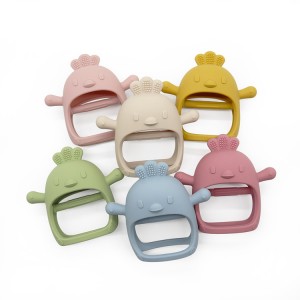
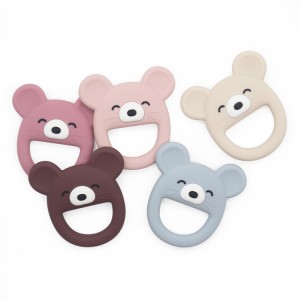
Our product range already includes different silicone teether formats, including food-grade silicone teethers, animal teethers, teething rings, and handle-style teethers. This product experience also gives our team a practical reference when developing new designs.
For brands, this means you can discuss the product concept and manufacturing requirements with one development partner instead of coordinating every stage separately.
17. From One Teether Idea to a Complete Product Line
A successful custom project does not necessarily stop at one product.
Once the core design language has been established, brands can develop a coordinated product family.
For example:
One Animal Character
→ Teether
→ Rattle Teether
→ Stacking Toy
→ Sensory Toy
→ Feeding Product
→ Gift Set
Or:
One Brand Color System
→ Teether Collection
→ Baby Feeding Collection
→ Bath Toy Collection
This is where OEM/ODM development becomes more than simple product customization.
The same design language can be extended across a product line, helping a brand build a more recognizable baby product collection.
A single custom project can also be extended into a broader product line, including silicone teething rings, animal silicone teethers and handle silicone teethers,
18. Common Mistakes When Developing Custom Silicone Teethers
1. Starting with the unit price
The cheapest quotation does not necessarily represent the lowest total project cost.
A poorly defined design can create additional tooling changes, sample revisions, or production problems.
2. Finalizing packaging too late
Packaging dimensions and labeling requirements should be considered before mass production.
3. Treating the first sample as the final product
Sampling is a development stage. Minor adjustments are normal.
4. Discussing compliance after production begins
The target market and applicable requirements should be discussed before production whenever possible.
5. Focusing only on appearance
A successful teether needs to consider design, structure, manufacturability, quality, and the intended use—not just whether the product looks attractive in a rendering.
6. Ordering without a clear specification
Color, dimensions, logo method, packaging, quantity, and inspection requirements should be confirmed before production.
19. A Better Way to Start Your Custom Silicone Teether Project
If you are developing a new silicone teether for your brand, you can start with something as simple as:
“This is the product we want to create.”
Send us:
- • Your sketch
- • Reference images
- • Existing product sample
- • 3D file, if available
- • Target market
- • Approximate size
- • Desired colors
- • Logo requirements
- • Packaging ideas
- • Estimated quantity
Our team can then review the concept and determine the next development step.
Whether you already have a finished design or only have an initial idea, the goal is the same:
Turn the concept into a practical, manufacturable silicone teether that is ready for your product line.
Frequently Asked Questions
Can Melikey develop a silicone teether from a sketch?
Yes. A custom project can start from a sketch, reference image, existing sample, or 3D design. The design requirements can then be reviewed before moving into 3D development and tooling.
Can I customize the shape and size of a silicone teether?
Yes. Custom shape and dimensions can be developed according to the product concept and manufacturing requirements.
Can I customize the color and logo?
Yes. Custom colors and logo applications can be discussed according to the product structure and branding requirements.
Does Melikey support OEM and ODM silicone teethers?
Yes. Melikey supports both OEM projects based on customer designs and ODM projects where customers need product development support.
Can you customize silicone teether packaging?
Yes. Packaging can be customized according to the product, brand requirements, and target market.
How does the silicone teether development process work?
A typical process is:
Concept → Design → 3D Model → Mold → Prototype → Sample Approval → Testing & QC → Mass Production → Packaging → Delivery.
The exact process may vary depending on the product design and project requirements.
What information should I provide when requesting a custom teether?
Useful information includes the product concept, reference images or drawings, approximate size, target market, desired colors, logo requirements, packaging requirements, estimated quantity, and any specific testing or documentation requirements.
Can Melikey develop a completely new silicone teether design?
Yes. For ODM projects, the development can start from a product concept and progress through design, 3D development, mold development, sampling, and production.
Author Bio
Wendy He is a silicone baby product expert with extensive experience in baby feeding product development and OEM customization solutions. She specializes in food-grade silicone products, infant feeding solutions, and private label baby product manufacturing.
If you are in business,You may like
Ready to Develop Your Custom Silicone Teether?
Send your concept to Melikey.
Our team can help you evaluate the design, develop the product, create samples, and move the approved silicone teether into production.
Custom Shape • Custom Color • Custom Logo • Custom Packaging • OEM / ODM
Post time: Sep-29-2026