
By Wendy He – Silicone Baby Product Expert
Updated: Sep 18, 2026
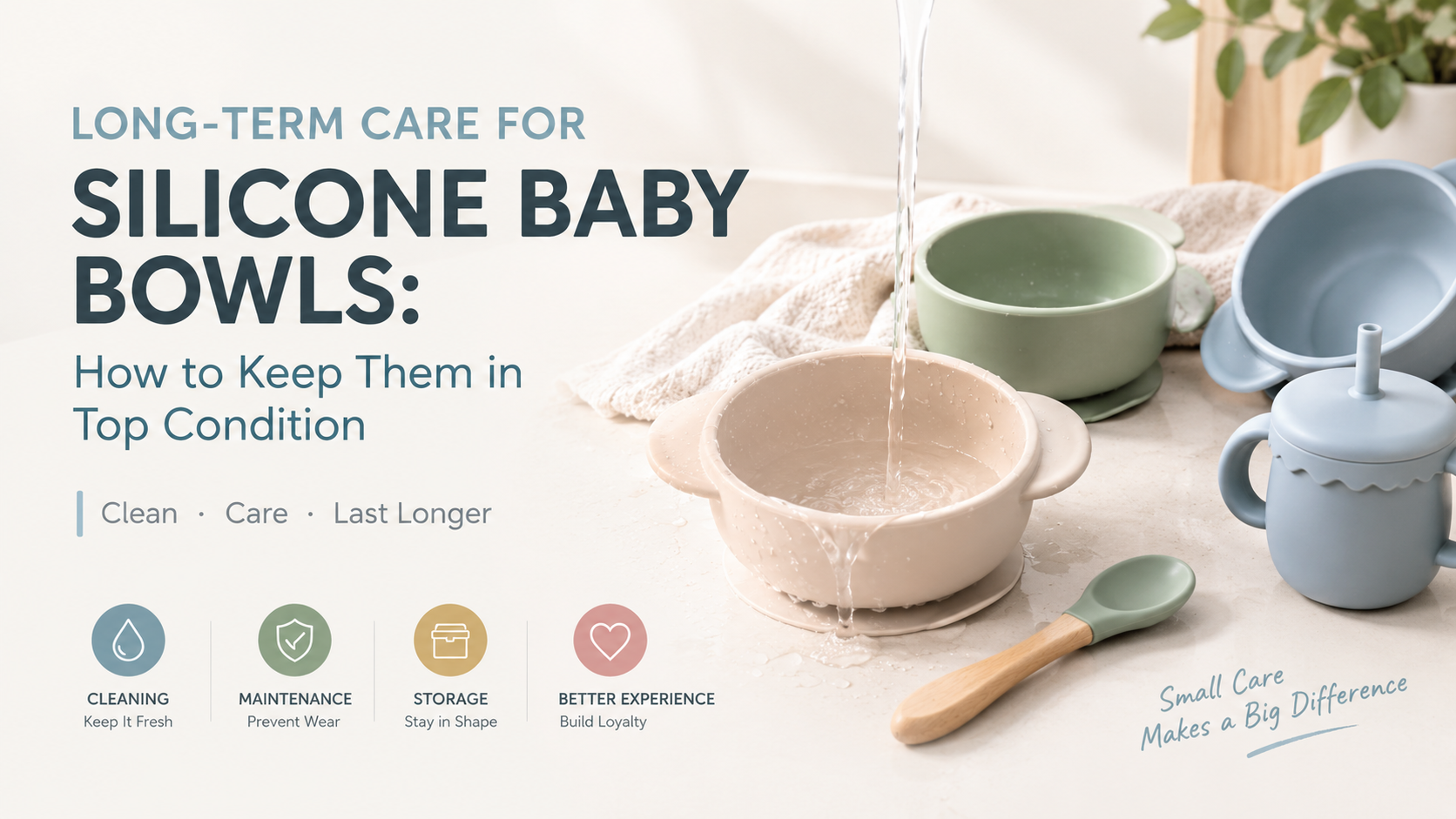
Key Takeaways
-
• Proper cleaning, rinsing, drying, and storage can help silicone baby bowls stay in good condition over time.
- • Prompt cleaning helps reduce food residue, odors, and staining caused by certain foods.
- • Cleaning methods should always match the care instructions and construction of the specific product.
- • CRegular inspection helps identify visible wear or damage before continued use becomes inappropriate.
- • For baby product brands, clear care instructions can improve the post-purchase experience and help customers get more long-term value from their products.
Quick Answer
How do you keep silicone baby bowls in top condition?
Clean the bowl promptly after use with a suitable dishwashing detergent, rinse it thoroughly, and allow it to dry completely before storage. Avoid cleaning methods, temperatures, or tools that are not recommended for the specific product. For brands, providing clear care instructions can also help customers use the product correctly and maintain a better experience after purchase.
Introduction
A silicone baby bowl is often used every day, which means the customer experience does not end when the product is delivered. How the bowl is cleaned, dried, stored, and maintained can affect its appearance, odor, and overall condition over time.
For baby product brands, providing practical care guidance is more than a customer-service detail. Simple instructions can help customers avoid common misuse, maintain the product properly, and get more value from it throughout its useful life.
For manufacturers and brands, the goal should not be to give customers a long list of complicated rules. A better approach is to provide a simple care routine that is easy to understand and consistent with the tested characteristics of the specific product.
Why Long-Term Care Matters for Silicone Baby Bowls
A silicone baby bowl is often used every day, which means the customer experience does not end when the product is delivered. How the bowl is cleaned, dried, stored, and maintained can affect its appearance, odor, and overall condition over time.
Long-term care is therefore not about making a silicone bowl last indefinitely. It is about helping customers maintain the product appropriately and recognize when it may need to be replaced.
Daily Use Can Affect Product Appearance and Condition
Baby feeding products can come into contact with a wide range of foods, including oily foods, sauces, fruits, and other ingredients with strong colors or odors.
If food residue is left on the bowl for an extended period, cleaning may become more difficult. Inadequate rinsing or drying can also leave behind detergent residue or moisture.
A simple routine can help:
Use → Clean → Rinse → Dry → Store
This basic process is usually more useful to customers than a long list of technical instructions.
Proper Care Helps Customers Get More Value From the Product
Customers generally expect a baby feeding product to remain practical and presentable throughout regular use. Proper care can help maintain the product's appearance and usability while reducing unnecessary wear caused by improper handling.
For brands, this is particularly relevant when products are positioned as everyday feeding essentials. A clear care guide gives customers practical information they can use after purchase rather than leaving them to determine suitable cleaning methods themselves.
Care Guidance Is Part of the Brand Experience
The product itself is only one part of the customer experience.
For a baby brand, the experience can continue through:
Product → Packaging → Care Instructions → Customer Support → Long-Term Use
A short care card, packaging insert, or online care guide can therefore become a useful extension of the product.
This is especially valuable for products sold through e-commerce, where customers may not have an opportunity to ask a salesperson how the product should be cleaned or stored.
How to Clean a Silicone Baby Bowl Properly
A good cleaning routine does not need to be complicated. The most important steps are to remove food residue, wash the bowl appropriately, rinse it thoroughly, and dry it completely before storage.
Because silicone baby bowls can differ in construction, surface treatment, decoration, suction bases, or additional materials, the manufacturer's care instructions should take priority over general cleaning advice.
Step 1: Remove Food Residue Promptly
Start by removing remaining food from the bowl after feeding.
This is particularly useful when the bowl has been used for oily foods, sauces, or strongly colored ingredients. Leaving food residue on the surface for a long period can make cleaning more difficult and may contribute to lingering odors or stains.
For bowls with textured details, molded patterns, handles, or suction bases, pay attention to areas where food may collect.
A quick rinse immediately after use can make the later cleaning process easier.
Step 2: Wash With a Suitable Dishwashing Detergent
Wash the bowl using a mild dishwashing detergent and an appropriate sponge or cleaning brush.
The cleaning tool should be suitable for the product surface. Avoid unnecessary aggressive scrubbing, especially when the product includes printed decoration or other surface details.
For everyday cleaning, the objective is simple:
- • Remove food residue
- • Clean the entire food-contact surface
- • Clean edges and difficult-to-reach areas
- • Avoid unnecessary abrasion
The exact detergent and cleaning method should follow the product's care instructions.
Step 3: Rinse Thoroughly
After washing, rinse the bowl thoroughly with clean water.
This step removes remaining detergent from the surface and is particularly important for products used directly for baby food.
Pay attention to:
- • Bowl edges
- • Handles
- • Molded details
- • Suction bases
- • Seams or connected components, where applicable
For a product with multiple components, each component should be cleaned according to its own care requirements.
Step 4: Dry Completely Before Storage
Allow the bowl to dry completely before putting it away.
Do not immediately place a wet bowl into a closed container or stack it while moisture remains on the surface. Proper drying is a simple part of maintaining good storage conditions.
For bowls with a suction base or other recessed areas, check that water has not remained underneath or around the base.
A practical routine is:
Wash → Rinse → Air Dry → Store
Step 5: Inspect the Bowl Regularly
Cleaning is also a good opportunity to check the condition of the product.
Look for visible signs such as:
- • Cuts or cracks
- • Significant deformation
- • Damaged edges
- • Unusual surface changes
- • Damage to suction components, where applicable
If a product shows significant damage or no longer functions as intended, customers should follow the manufacturer's guidance regarding continued use or replacement.
How to Remove Odors and Food Stains From Silicone Bowls
Odor and staining are two common reasons customers may feel that a frequently used silicone product no longer looks or smells as fresh as when it was new.
These issues do not necessarily indicate that the silicone bowl is damaged. Food composition, cleaning frequency, drying, and storage can all affect the user experience.
Why Silicone Bowls May Retain Food Odors
Some foods contain oils or strong flavors that can leave noticeable odors after use.
Examples include:
- • Tomato-based sauces
- • Curry and other strongly seasoned foods
- • Certain fruits
- • Oily foods
If the bowl is not cleaned thoroughly or is stored before it has dried completely, odors may become more noticeable.
The first response should therefore be a thorough cleaning rather than immediately using aggressive cleaning methods.
How to Deal With Mild Food Odors
For mild odors, start with the basic cleaning routine:
- 1. Remove all food residue.
- 2. Wash the bowl thoroughly with a suitable dishwashing detergent.
- 3. Rinse completely.
- 4. Allow the bowl to dry fully in a clean environment.
- 5. Repeat the cleaning process if necessary.
Avoid assuming that stronger chemicals or abrasive treatments will provide a better result. The cleaning method should remain compatible with the specific product and its care instructions.
For brands, it is useful to explain this principle directly in customer care materials:
Start with proper cleaning and drying before trying additional cleaning methods.
How to Reduce Food Staining
Some strongly colored foods may leave temporary or persistent discoloration on silicone surfaces.
Customers can reduce the likelihood of noticeable staining by:
- • Cleaning the bowl soon after use
- • Removing strongly colored food residue promptly
- • Washing the entire surface thoroughly
- • Avoiding prolonged contact with food residue
- • Following the manufacturer's cleaning recommendations
It is also useful for brands to distinguish appearance from product safety. A change in color does not automatically mean that a product is unsafe, while visible physical damage should be treated separately.
Cleaning Methods to Use With Care
Not every silicone baby bowl should be treated in exactly the same way.
A bowl made entirely from silicone may have different care requirements from a product that combines silicone with wood, printed elements, suction components, or other materials. Therefore, brands should avoid publishing universal cleaning claims unless they are supported by the specific product's testing and care instructions.
Dishwasher Cleaning
Some silicone baby bowls are designed to be dishwasher-safe, but this should be confirmed for the specific product.
Brands should clearly state the applicable dishwasher guidance rather than assuming that all silicone products have identical dishwasher performance.
If dishwasher use is supported, the care instructions should ideally specify any relevant requirements, such as:
- • Recommended rack position
- • Whether removable components should be separated
- • Whether additional components have different requirements
If dishwasher use has not been confirmed for a particular product, customers should follow the manufacturer's recommended hand-washing method instead.
Boiling and High-Temperature Cleaning
Silicone is commonly associated with heat resistance, but that does not mean every silicone baby product should automatically be boiled or exposed to any high-temperature cleaning process.
Product construction matters.
For example, a feeding product may include:
- • Multiple materials
- • Attached components
- • Printed decoration
- • Suction structures
- • Adhesive or mechanically connected parts
Therefore, high-temperature cleaning should be based on the care instructions and testing for the specific product, rather than a general assumption about silicone.
Abrasive Cleaners and Harsh Cleaning Tools
Avoid unnecessary use of abrasive cleaning pads or aggressive cleaning methods.
The purpose of cleaning is to remove food residue effectively, not to repeatedly scrub the product surface as hard as possible.
A suitable soft sponge or appropriate cleaning brush is generally a more practical choice for routine cleaning, subject to the manufacturer's instructions.
Mixed-Material Products Need Different Care
A silicone baby feeding collection may include products made from more than one material.
For example:
| Product Type | Main Care Focus |
|---|---|
| Silicone Baby Bowl | Cleaning, rinsing and complete drying |
| Suction Bowl | Clean both the bowl and suction area |
| Silicone + Wood Product | Follow the care requirements for each material |
| Decorated Product | Follow product-specific care instructions for the decoration |
This is an important point for brands selling multiple feeding products under one collection: one general care instruction may not be suitable for every SKU.
For products with integrated suction bases, care should also include the suction area and its contact surface. Brands offering silicone suction baby bowls should provide product-specific guidance for cleaning and maintaining the suction base.
How to Store Silicone Baby Bowls for Long-Term Use
Cleaning is only one part of long-term care. Proper storage also helps keep silicone baby bowls clean, dry, and ready for their next use.
Good storage does not require complicated equipment. The basic principle is to make sure the product is clean and completely dry before placing it in a suitable storage area.
Keep Bowls Clean and Fully Dry
Before storage, make sure there is no remaining food residue or excess moisture.
This is especially important around:
- • Bowl edges
- • Handles
- • Suction bases
- • Molded details
- • Areas where separate components connect
For feeding sets, allow each component to dry properly rather than storing the entire set while some pieces are still wet.
Avoid Prolonged Compression or Improper Storage
Silicone products are flexible, but they should still be stored according to their design.
Avoid unnecessarily folding, squeezing, or placing heavy objects on top of products if doing so could cause deformation.
For stackable bowls and feeding sets, organize products in a way that allows them to retain their intended shape without excessive pressure.
Keep Products in a Clean, Dry Storage Area
Store clean and dry silicone baby bowls in a suitable environment away from unnecessary moisture, excessive heat, and prolonged direct sunlight.
The objective is straightforward:
Clean product + complete drying + appropriate storage = better long-term product care.
For brands, this information can be included in a short care guide rather than presented as a complicated maintenance procedure.
Keep Different Components Organized
If the product is part of a feeding set, customers may need to store several components together, such as a bowl, plate, cup, spoon, fork, or bib.
Simple organization can make the set easier to use and maintain.
For example, brands can recommend keeping the components together in a clean, dry location while avoiding storage methods that compress or unnecessarily deform individual products.
A Simple Silicone Baby Bowl Care Routine
Customers do not need to remember every detail in a long care guide. A simple routine is easier to follow consistently.
After Every Use
1. Remove food residue
Do not leave food sitting in the bowl longer than necessary.
2. Wash thoroughly
Use a suitable dishwashing detergent and cleaning tool.
3. Rinse completely
Remove remaining food and detergent residue.
4. Dry fully
Allow the bowl and any recessed areas to dry before storage.
Regularly Check the Product
As part of normal use, customers can check for:
- • Unusual odors or persistent residue
- • Significant staining
- • Cuts or cracks
- • Deformation
- • Damaged suction components, where applicable
The purpose of regular inspection is not to encourage customers to replace products unnecessarily. It is simply a practical way to identify visible changes that may affect continued use.
Before Long-Term Storage
If a silicone baby bowl will not be used for an extended period:
Wash → Rinse → Dry Completely → Store in a Clean, Dry Place
For products containing multiple materials or components, follow the care requirements provided for the specific product.
How Brands Can Turn Care Guidance Into a Better Customer Experience
For a baby product brand, care instructions can serve a purpose beyond basic product maintenance.
A customer who understands how to clean and store a product is more likely to use it as intended and can make better use of the product after purchase.
This is particularly important when a brand sells multiple products as one coordinated collection. For example, a baby feeding set may include a bowl, plate, cup, spoon, fork, and bib, each of which may have its own care considerations.
This creates an opportunity for brands to treat product care as part of their overall customer experience.
Add Simple Care Instructions to Product Packaging
A short care card or packaging insert can communicate the most important information immediately after purchase.
It does not need to contain every possible cleaning scenario.
A useful care card can focus on:
- • How to clean the product
- • How to dry it
- • How to store it
- • Which cleaning methods are supported
- • What to avoid
- • When to inspect or replace the product
For e-commerce brands, the same information can also be provided on the product page.
Explain What Customers Should and Should Not Do
Customers generally benefit more from clear instructions than from technical descriptions.
For example, instead of providing a long explanation of silicone properties, brands can present a simple format:
DO
- • Clean after use
- • Rinse thoroughly
- • Dry completely
- • Follow the product's care instructions
CHECK
- • Product surface
- • Bowl edges
- • Suction areas
- • Other components
AVOID
- • Unapproved cleaning methods
- • Excessive abrasion
- • Improper storage
- • Continued use of visibly damaged products
This makes the information easier to scan and more practical for everyday use.
Make Care Information Easy to Find After Purchase
A care guide is more useful when customers can find it when they need it.
Brands can provide care information through:
- • Product packaging
- • Printed care cards
- • Product detail pages
- FAQ sections
- • QR codes linking to an online care guide
- • Customer service resources
For brands selling feeding sets, it can also be useful to provide care information for the individual components rather than assuming that every product has exactly the same requirements.
Reduce Avoidable Misuse and Support Questions
Some customer questions arise simply because care information was unclear or difficult to find.
A concise guide can help address common questions such as:
Can I put this bowl in the dishwasher?
How should I clean the suction base?
Why does the bowl have a food odor?
How should I store the feeding set?
Clear instructions cannot eliminate every customer-service issue, but they can give customers a reliable reference before they resort to trial and error.
For brands, this turns product care into a practical form of post-purchase support.
What Should a Silicone Baby Bowl Care Guide Include?
If you are a baby product brand, retailer, or importer creating care instructions for your own silicone baby bowl, the information should be based on the actual product rather than generic silicone care advice.
A practical care guide can include the following:
| Care Information | What to Include |
|---|---|
| Cleaning | Recommended cleaning method and suitable cleaning tools |
| Detergent | Recommended type of dishwashing detergent, where applicable |
| Temperature | Applicable temperature guidance based on product specifications or testing |
| Dishwasher | Whether the specific product is dishwasher-safe |
| Drying | Recommended drying method and areas requiring attention |
| Storage | Basic storage conditions and handling guidance |
| Inspection | Visible signs of wear or damage to check |
| Replacement | Guidance on when continued use may no longer be appropriate |
The most important principle is product-specific accuracy.
A silicone bowl, suction bowl, silicone-and-wood product, or decorated feeding product may have different care requirements. Brands should therefore work with their manufacturer to confirm the appropriate instructions before printing them on packaging or publishing them online.
For products sold in regulated markets, care information should also be consistent with the product's applicable testing, specifications, and documentation. For example, U.S. children’s products subject to applicable safety rules may require third-party testing and certification, with the manufacturer or importer responsible for issuing the applicable Children’s Product Certificate. See the CPSC Children's Product Certificate guidance for current requirements.
Frequently Asked Questions About Silicone Baby Bowl Care
How often should a silicone baby bowl be cleaned?
A silicone baby bowl should be cleaned after each use to remove food residue and maintain good hygiene. After washing, rinse the bowl thoroughly and allow it to dry completely before storage.
Can silicone baby bowls go in the dishwasher?
Some silicone baby bowls are dishwasher-safe, but this should be confirmed for the specific product. Brands should provide dishwasher instructions based on the product's specifications and testing rather than assuming all silicone bowls have the same care requirements.
How do you remove odors from a silicone baby bowl?
Start by removing food residue and washing the bowl thoroughly with a suitable dishwashing detergent. Rinse completely and allow it to dry fully. Strongly flavored or oily foods may leave noticeable odors, so prompt cleaning can help minimize residue and lingering smells.
How can I prevent food stains on a silicone baby bowl?
Clean the bowl soon after use, particularly after serving strongly colored foods. Thoroughly remove food residue rather than allowing it to remain on the surface for an extended period. Some discoloration may still occur depending on the food and product.
How should silicone baby bowls be stored?
Clean and dry the bowl completely before storage. Keep it in a clean, dry location and avoid unnecessary compression, folding, or pressure that could affect the product's intended shape.
When should a silicone baby bowl be replaced?
Customers should follow the manufacturer's replacement guidance. In general, a product should be inspected regularly and should not continue to be used if it has significant cracks, cuts, deformation, or other damage that affects its intended function.
Final Thoughts: Good Product Care Builds Long-Term Value
A silicone baby bowl is an everyday feeding product, so its value continues well beyond the initial purchase.
Simple habits such as cleaning promptly, rinsing thoroughly, drying completely, storing appropriately, and checking the product regularly can help customers maintain their feeding products in good condition.
For baby product brands, providing this information is also an opportunity to extend the customer experience beyond the sale. A clear and practical care guide gives customers useful support, helps them understand the product better, and demonstrates attention to the product's long-term use.
When care instructions are based on the actual product and presented in a simple format, they become a useful part of the brand experience rather than just another piece of packaging information.
Author Bio
Wendy He is a silicone baby product expert with extensive experience in baby feeding product development and OEM customization solutions. She specializes in food-grade silicone products, infant feeding solutions, and private label baby product manufacturing.
If you are in business,You may like
Create Better Silicone Baby Products for Your Brand
Looking for silicone baby bowls or coordinated feeding products for your brand? Melikey supports custom product development, branding, color selection, packaging, and OEM/ODM projects for baby feeding products.
Post time: Sep-18-2026