
By Wendy He – Silicone Baby Product Expert
Updated: May 21, 2026
Key Takeaways
-
• Suction plates improve feeding stability and reduce mess
- • Standard plates offer more flexibility for older toddlers
- • Divided suction plates are ideal for self-feeding stages
- • Standard designs are easier for travel and fast serving
- • B2B buyers should balance usability, durability, and retail demand
Introduction
Suction baby plates and standard baby plates are designed for different feeding needs and user scenarios. Suction designs help stabilize the plate during self-feeding, reducing spills and improving meal efficiency for babies learning independent eating. Standard plates, on the other hand, offer greater flexibility for older toddlers, travel feeding, and quick serving situations. Understanding the differences between these two feeding solutions helps parents, retailers, and wholesale buyers choose products that better match feeding stages, usability expectations, and market demand.
What Is the Difference Between Suction and Standard Baby Plates?
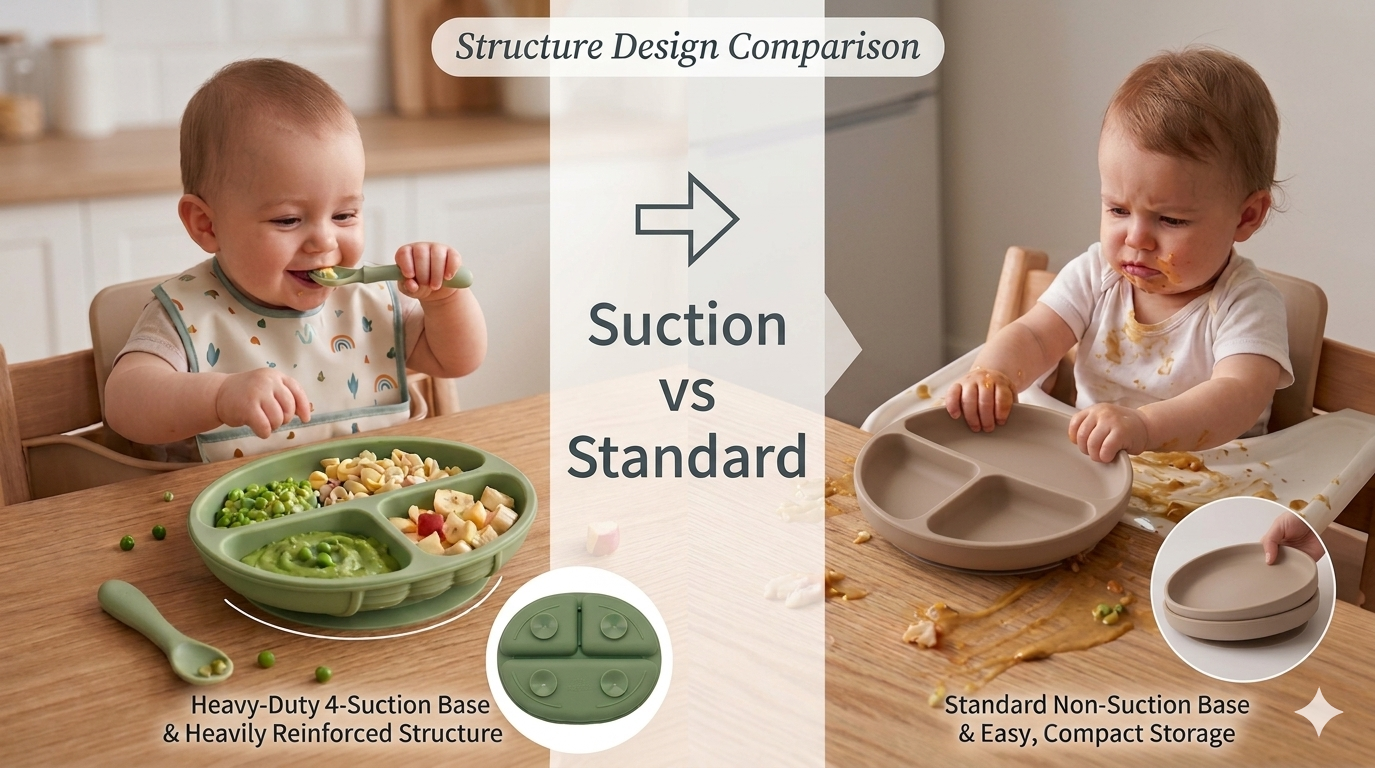
The primary difference between suction and standard baby plates is stability. Suction baby plates feature a suction base that attaches firmly to smooth surfaces, while standard baby plates rely entirely on placement without additional grip support.
Suction plates are designed to prevent babies from lifting, sliding, or overturning the plate during meals. This feature becomes especially important during self-feeding stages when babies begin exploring food independently.
Standard baby plates are simpler in structure and generally easier to move, stack, and transport. They are commonly used for older toddlers who already have better hand control and feeding coordination.
In wholesale markets, suction plates are often positioned as premium feeding products because they solve a major pain point for parents: food mess and frequent spills.
Structure Design Comparison
Suction plates usually include:
- • Silicone suction base
- • Heavier bottom structure
- • Stable feeding support
Standard plates usually focus on:
- • Lightweight structure
- • Easy storage
- • Flexible serving usage
Both designs can be made with food-grade silicone, but their functionality targets different feeding behaviors.
Food-grade silicone is widely preferred for baby feeding products because it is durable, heat resistant, and suitable for repeated food contact according to FDA food safety guidelines.
Stability and Grip Performance
Suction strength directly affects feeding performance. Strong suction helps:
- • Reduce accidental spills
- • Improve feeding consistency
- • Support independent eating development
Weak suction performance often leads to customer dissatisfaction and higher product return rates.
Material and Cleaning Differences
Most modern baby plates use food-grade silicone because it is:
- • BPA-free
- • Heat resistant
- • Dishwasher safe
- • Durable for daily use
However, suction plates may require more careful cleaning around the suction base compared to standard flat-bottom designs.
Why Are Suction Baby Plates Better for Self-Feeding?
Suction baby plates are widely considered the best option for babies learning self-feeding because they improve stability and reduce frustration during meals. Self-feeding development is also encouraged by pediatric experts because it helps improve fine motor coordination and eating independence during early growth stages.
Babies naturally explore objects by pushing and pulling. Without suction support, standard plates are easily tipped or thrown, creating unnecessary mess and interrupting feeding routines.
Strong suction designs help babies focus on food handling and spoon coordination rather than plate movement.
For retailers and distributors, suction products also tend to perform better in premium feeding categories due to the growing demand for strong suction silicone feeding products designed for self-feeding babies.
Spill Prevention Benefits
Spill reduction is one of the biggest selling points of suction plates. Less spilling means:
- • Cleaner feeding environments
- • Less food waste
- • Faster post-meal cleanup
This directly improves user satisfaction.
Feeding Stability for Babies
Stable plates help babies:
- • Build confidence during self-feeding
- • Practice motor coordination
- • Learn independent eating skills more effectively
Feeding stability is particularly important between 6 and 18 months.
Independent Eating Development
Independent eating products continue to grow in global demand because more parents prioritize Montessori-style feeding and self-learning routines.
Suction baby plates align well with this feeding philosophy.
When Are Standard Baby Plates a Better Choice?
Although suction plates offer major advantages, standard baby plates still perform better in certain feeding situations.
For older toddlers who already have stable hand coordination, suction functionality may no longer be necessary. Standard plates provide more flexibility for fast meal serving and easier repositioning.
They are also more practical for travel, restaurants, and daycare environments where smooth suction-compatible surfaces may not always be available.
Travel and Outdoor Feeding
Standard plates are easier to:
- • Stack in bags
- • Carry during travel
- • Use on uneven surfaces
This makes them suitable for mobile feeding situations.
Older Toddler Feeding
Toddlers over 18 months generally develop stronger feeding control and may prefer larger, simpler plate designs without suction restrictions.
Fast Cleaning and Storage
Standard plates usually have:
- • Simpler bottom structures
- • Faster drying performance
- • Easier stacking and storage
These advantages are useful for high-frequency feeding environments.
Suction vs Standard Plates: Pros and Cons Comparison
Both suction and standard plates serve important feeding functions, but the best option depends on feeding stage and usage priorities.
| Feature | Suction Plates | Standard Plates |
|---|---|---|
| Stability | Excellent | Moderate |
| Spill Prevention | Strong | Limited |
| Travel Flexibility | Moderate | Excellent |
| Self-Feeding Support | Excellent | Basic |
| Storage Convenience | Moderate | Excellent |
| Cleaning Speed | Moderate | Fast |
Advantages of Suction Plates
Suction plates are best for:
- • Self-feeding babies
- • High-mess feeding stages
- • Premium feeding product lines
- • Montessori-style feeding routines
Many parents prefer divided silicone baby plate solutions because they help organize food portions while improving meal presentation for toddlers.
Advantages of Standard Plates
Standard plates are preferred for:
- • Older toddlers
- • Travel feeding
- • Quick meal preparation
- • Lightweight product collections
Which Option Has Better Long-Term Value?
For B2B buyers, suction plates generally deliver higher perceived value and stronger retail differentiation, while standard plates offer lower production costs and easier logistics.
Many brands choose to carry both options to cover different feeding stages and market segments.
Which Plate Design Works Best for Different Feeding Stages?
Feeding stages significantly affect which plate design performs best.
6–9 Months
At this stage, babies begin solid food introduction and frequently touch, pull, and move objects.
Suction plates are strongly recommended because they minimize feeding disruption.
9–18 Months
This is the peak self-feeding stage. Divided suction plates help organize food portions while maintaining plate stability.
18 Months and Older
Older toddlers often transition well to standard plates because they have better coordination and feeding habits.
Larger standard plates may become more practical for everyday use.
Which Design Is Better for Wholesale Buyers?
From a wholesale perspective, both suction and standard plates have strong market opportunities, but they serve different customer expectations.
Suction plates are typically associated with:
- • Premium product positioning
- • Higher retail pricing
- • Stronger differentiation
Standard plates are associated with:
- • Lower production cost
- • Simpler packaging
- • Faster inventory turnover
Many global brands now invest in custom silicone baby tableware manufacturing to create differentiated feeding collections for specific retail markets.
Market Demand Trends
Demand for suction baby plates continues growing due to increasing interest in self-feeding products and Montessori-inspired parenting.
Product Return Reduction
Products with stronger functionality and clearer user benefits generally experience lower return rates and higher customer satisfaction.
SKU Planning for Retailers
Offering multiple plate structures helps brands:
- • Cover wider customer groups
- • Improve category depth
- • Increase repeat purchasing opportunities
Frequently Asked Questions About Suction and Standard Baby Plates
Are suction plates safer for babies?
Yes. Suction plates reduce movement and tipping, helping create a safer feeding environment for self-feeding babies.
Do suction plates work on all surfaces?
No. Suction plates perform best on smooth, flat surfaces such as glass, plastic, or sealed wood tables.
Are standard plates better for toddlers?
For older toddlers with stable feeding coordination, standard plates can be more flexible and practical.
Which design is easier to clean?
Standard plates are generally easier to clean because they have simpler bottom structures.
Are suction plates worth the higher cost?
For many families and retailers, yes. Improved stability and reduced mess often justify the higher value.
Which type is better for daycare use?
It depends on the feeding environment. Suction plates are better for younger children, while standard plates may be easier for group feeding and storage.
Conclusion
Choosing between suction and standard baby plates depends on feeding stage, usage environment, and customer expectations. Suction designs are generally better for self-feeding babies because they improve stability and reduce spills, while standard plates offer greater flexibility for older toddlers and travel use.
For retailers and wholesale buyers, combining both designs within a feeding collection helps cover wider market demand and improves product line versatility. Focusing on functionality, durability, and feeding efficiency is the key to building successful baby feeding product collections.
Author Bio
Wendy He is a silicone baby product expert with extensive experience in baby feeding product development and OEM customization solutions. She specializes in food-grade silicone products, infant feeding solutions, and private label baby product manufacturing.
If you are in business,You may like
We offer more products and OEM service, welcome to send inquiry to us
Post time: May-21-2026