
By Wendy He – Silicone Baby Product Expert
Updated: Aug 01, 2026
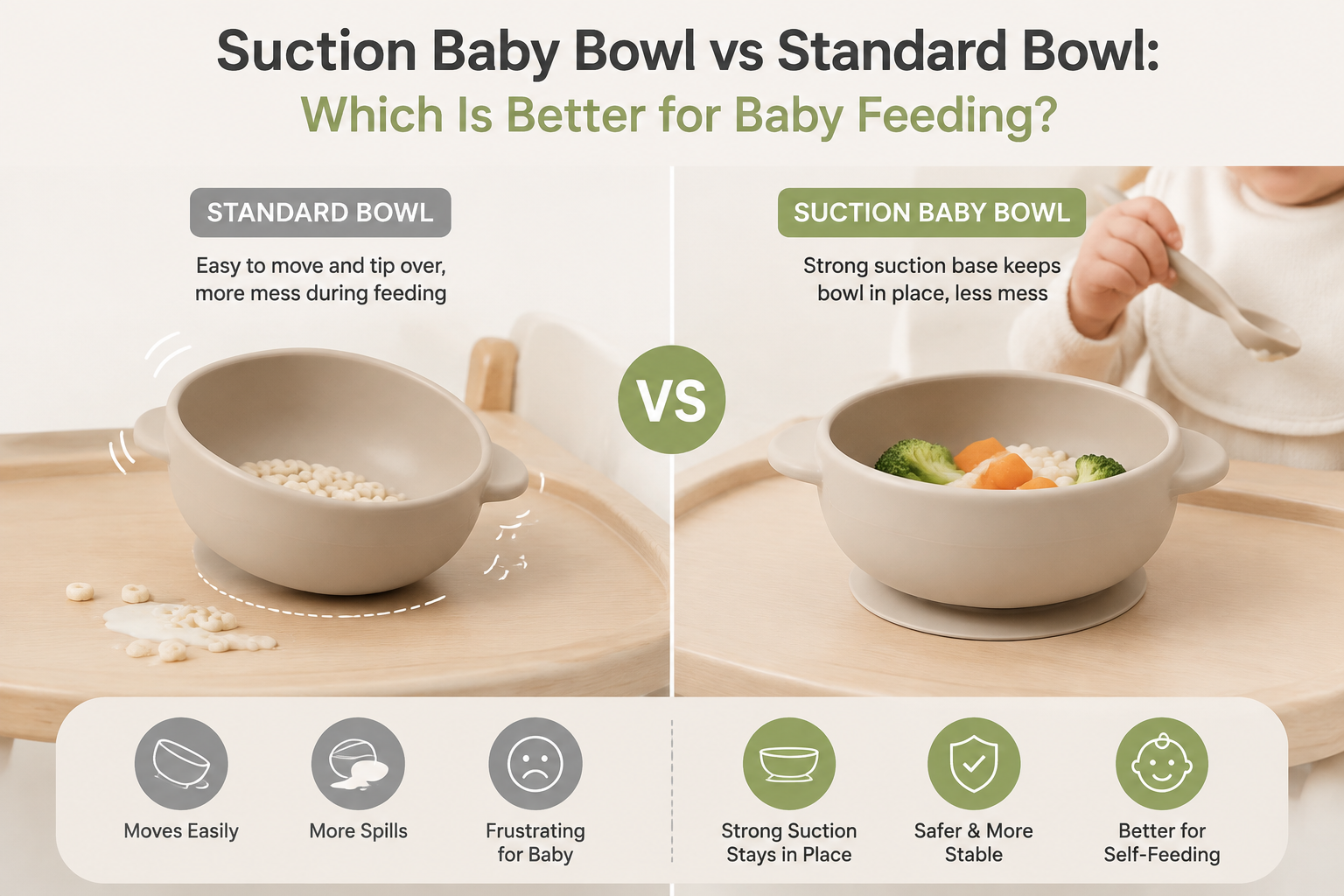
Suction baby bowls have become increasingly popular because they provide better stability, reduce spills, and support independent feeding. This guide compares suction baby bowls with standard bowls, helping parents, retailers, and baby brands understand which design delivers better safety, convenience, and long-term value.
Key Takeaways
-
• Suction baby bowls provide better stability and help reduce spills during self-feeding.
- • Standard bowls may work for general use but often lack infant-focused safety features.
- • A strong suction base supports baby-led weaning by allowing babies to practice independent eating.
- • Buyers should evaluate suction strength, silicone quality, design, and safety certifications before purchasing.
- • For baby brands, suction bowls offer stronger market differentiation and customization opportunities.
Quick Answer
Suction baby bowls are generally better for infant feeding because they provide improved stability, reduce accidental spills, and support babies learning to eat independently. Unlike standard bowls that can easily slide or tip over, suction designs are specifically developed for infants with features such as non-slip bases, soft silicone materials, and baby-friendly structures.
As babies transition from milk feeding to solid foods, the tools they use during mealtime can significantly influence their learning experience. While traditional bowls have been used for many years, modern parents are increasingly choosing suction baby bowls because they solve common feeding challenges such as spills, movement, and frustration during self-feeding.
A baby who is learning to eat naturally explores food through touching, grabbing, and moving utensils. During this stage, bowl stability becomes an important factor. A bowl that constantly slides across the table can interrupt the feeding process and create unnecessary mess.
Suction baby bowls are designed specifically to address these problems. By combining food-grade silicone with a stable suction base, they provide a more controlled feeding environment while supporting children's independence.
For retailers, distributors, and baby product brands, understanding the difference between suction and standard designs is also essential when selecting products that match current consumer expectations.
What Is a Suction Baby Bowl?
A suction baby bowl is a feeding bowl designed with a non-slip suction base that attaches securely to smooth surfaces such as highchair trays, tables, or feeding surfaces.
Unlike traditional bowls that simply sit on a surface, suction bowls use a vacuum-like mechanism to create additional stability, making them harder for babies to move, lift, or overturn.
Most suction baby bowls are made from food-grade silicone because silicone provides the flexibility and durability required for infant feeding products.
How Does a Suction Base Work?
The suction base works by creating a stronger connection between the bowl and the feeding surface.
When the base is pressed onto a smooth surface:
- 1. Air is pushed out from underneath the base.
- 2. The suction area creates resistance against movement.
- 3. The bowl remains more stable during feeding.
The effectiveness of suction depends on:
- • Base size
- • Silicone flexibility
- • Surface type
- • Product design quality
A well-designed suction bowl should stay secure during normal baby feeding activities while still allowing adults to remove it easily.
Why Are Suction Bowls Designed for Babies?
Babies develop feeding skills gradually.
During early stages of self-feeding, they often:
- • Push bowls away
- • Grab the bowl edge
- • Move food around
- • Experiment with utensils
Traditional bowls are not designed for these behaviors.
Suction baby bowls provide:
- • Better stability
- • Less food spilling
- • More independent learning
- • Reduced caregiver intervention
This makes them especially suitable for babies beginning solid foods and practicing baby-led weaning.
Suction Baby Bowl vs Standard Bowl: Key Differences
The biggest difference between these two designs is not simply the material—it is the feeding experience they create.
| Feature | Suction Baby Bowl | Standard Bowl |
|---|---|---|
| Stability | High stability with suction base | Easily moved |
| Spill Prevention | Helps reduce spills | Higher spill risk |
| Baby Self-Feeding | Supports independence | Requires more adult help |
| Safety Design | Made for infants | General-purpose design |
| Material Options | Usually food-grade silicone | Plastic, ceramic, metal, etc. |
| Durability | Flexible and impact resistant | Depends on material |
| Baby-Led Weaning | Highly suitable | Less practical |
Stability and Spill Prevention: Which Design Performs Better?
One of the biggest challenges during infant feeding is keeping the bowl in place.
For babies who are developing coordination skills, a moving bowl can make eating more difficult and increase frustration.
Why Babies Easily Move Standard Bowls
Standard bowls are designed mainly to hold food, not to support infant development.
Because they usually rely only on their own weight, babies can easily:
- • Push them across the table
- • Pull them toward themselves
- • Accidentally knock them over
This often results in:
- • Spilled food
- • More cleaning work
- • Interrupted feeding sessions
For younger children, these issues can make self-feeding more challenging.
How Suction Bases Reduce Mealtime Mess
A suction baby bowl provides additional stability by keeping the bowl attached to the feeding surface.
This helps:
Reduce Accidental Spills
Babies can focus more on eating instead of moving the bowl.
Support Self-Feeding
Children can practice using spoons and hands with fewer interruptions.
Reduce Food Waste
Less food ends up on tables or floors.
For parents, this means easier cleanup. For brands, this represents a clear product advantage that customers immediately understand.
Expert Tip
When evaluating suction baby bowls, do not judge performance only by appearance. A premium suction design should balance strong holding power with easy adult removal. Excessively weak suction creates frustration, while overly difficult removal reduces daily usability.
Feeding Experience: Supporting Baby-Led Weaning
Baby-led weaning has changed the way many families introduce solid foods. Instead of relying completely on adults feeding with a spoon, babies are encouraged to explore food, develop coordination, and gradually learn independent eating.
During this stage, the feeding environment plays an important role. Using a complete baby feeding set—including a stable suction bowl and ergonomic utensils—allows babies to focus on learning rather than struggling with moving dishes.
Why Stability Matters During Self-Feeding
When babies begin feeding themselves, they are still developing:
- • Hand-eye coordination
- • Grip strength
- • Spoon control
- • Food exploration skills
A standard bowl may move every time a baby touches it, making it difficult for them to scoop food successfully.
A suction baby bowl creates a more stable platform, allowing babies to:
- • Practice feeding independently
- • Explore different foods
- • Develop confidence during meals
For caregivers, this also reduces the need to constantly reposition the bowl.
Are Suction Bowls Better for Baby-Led Weaning?
Yes, suction bowls are generally more suitable for baby-led weaning because they are designed around the natural behaviors of babies learning to eat.
Key advantages include:
Improved Independence
Babies can practice eating without the bowl constantly moving.
Less Parent Intervention
Parents spend less time holding the bowl or cleaning spilled food.
Better Learning Environment
A stable feeding setup encourages babies to explore textures and develop eating skills.
For this reason, suction silicone bowls have become one of the preferred choices among families practicing baby-led weaning.
Safety Comparison: Suction Bowl vs Standard Bowl
Safety is one of the most important factors when choosing infant feeding products.
While both suction bowls and standard bowls can hold food, their safety performance can differ significantly depending on material and design.
Soft Silicone Material Provides Extra Protection
Most high-quality suction baby bowls are manufactured from food-grade silicone.
Compared with harder materials, silicone provides:
- • Soft touch surface
- • Flexible structure
- • Reduced break risk
- • Comfortable handling
This is especially beneficial for babies because feeding products are often touched, dropped, and handled during daily use.
A quality silicone suction bowl should also meet relevant safety requirements, such as:
- • BPA-free standards
- • Food-contact safety requirements
- • Third-party testing
Reduced Risk of Dropping and Breaking
Traditional bowls made from ceramic or glass may break if dropped.
This creates concerns including:
- • Sharp fragments
- • Safety hazards
- • Replacement costs
Silicone suction bowls provide a safer alternative because they are:
- • Lightweight
- • Flexible
- • Impact-resistant
Even when dropped or pushed, they are less likely to create dangerous situations.
This is especially beneficial for babies because feeding products are often touched, dropped, and handled during daily use. That reliability is why food-grade silicone baby products have become essential for modern families.
Cleaning and Daily Convenience Comparison
For parents and caregivers, cleaning convenience is a major consideration when selecting baby feeding products.
A feeding bowl is used multiple times every day, so easy maintenance directly affects the overall user experience.
Which Bowl Is Easier to Clean?
Silicone suction bowls usually provide easier cleaning because premium silicone has a smooth, non-porous surface.
Benefits include:
- • Less food residue buildup
- • Reduced odor absorption
- • Easier washing
- • Better hygiene maintenance
Many silicone bowls are also compatible with:
- • Dishwashers
- • Microwave heating
- • Freezer storage
- • Sterilization
This flexibility makes them suitable for modern family routines.
Storage and Everyday Use
Beyond cleaning, daily practicality also matters.
Standard bowls may be:
- • Heavier
- • More fragile
- • Less convenient for travel
Silicone suction bowls are often:
- • Lightweight
- • Flexible
- • Easy to store
- • Suitable for different environments
For families who travel frequently or have limited kitchen space, silicone designs provide additional convenience.
Are Suction Baby Bowls Worth the Extra Cost?
One common question from buyers is whether suction bowls justify a higher price compared with standard bowls.
The answer depends on the value they provide.
Long-Term Value for Parents
Although suction baby bowls may cost more initially, they often provide better long-term value because they offer:
- • Longer product lifespan
- • Fewer spills
- • Better feeding experience
- • Reduced replacement needs
A durable silicone suction bowl can often be used throughout multiple feeding stages, making it a practical investment.
Why Brands Prefer Silicone Suction Bowls
For baby product brands and retailers, suction bowls provide stronger market advantages.
Compared with basic bowls, suction designs offer:
Higher Perceived Value
Consumers are more willing to pay for products that solve real parenting challenges.
Better Product Differentiation
Unique suction designs help brands stand out in competitive markets.
More Customization Opportunities
Silicone suction bowls can be customized through:
- • Colors
- • Logo printing
- • Packaging
- • Product combinations
These flexible options make creating a custom silicone baby bowl line an attractive strategy for private-label baby brands.
What Should Buyers Look for in a High-Quality Suction Baby Bowl?
Not all suction bowls deliver the same performance. Buyers should evaluate several important factors before purchasing.
Strong and Reliable Suction Performance
A good suction bowl should provide:
✔ Stable attachment on smooth surfaces
✔ Easy adult removal
✔ Consistent performance after repeated use
Poor suction performance can reduce the product's main advantage.
Safe Food-Grade Silicone Material
Buyers should confirm:
✔ Food-grade silicone
✔ BPA-free material
✔ Safety testing documentation
✔ Odor-free performance
Material quality directly influences customer trust and product reputation.
Practical Product Design
A well-designed suction bowl should include:
✔ Suitable capacity
✔ Rounded edges
✔ Comfortable depth
✔ Easy-clean structure
✔ Baby-friendly shape
Design should always consider real feeding scenarios rather than focusing only on appearance.
Evaluating these factors ensures you select products that meet safety standards and customer expectations. For a step-by-step checklist and deeper sourcing tips, check out our full guide on how to choose a silicone baby bowl for your wholesale catalog.
Common Mistakes When Choosing Suction Baby Bowls
Even though suction bowls provide clear benefits, buyers should avoid several common mistakes.
Choosing Only Based on Appearance
A visually attractive bowl does not always provide good performance.
Important factors such as:
- • Suction strength
- • Material quality
- • Safety testing
are more important than color or design alone.
Ignoring Suction Performance Testing
A suction base is the main feature of this product category.
Buyers should evaluate whether the bowl can:
- • Stay stable during feeding
- • Work on different surfaces
- • Maintain performance over time
Selecting Products Without Safety Documentation
For baby products, safety should never be overlooked.
Reliable suppliers should provide:
- • Material information
- • Test reports
- • Compliance documents
This is especially important for international buyers.
Frequently Asked Questions About Suction Baby Bowls
Are suction bowls better than regular bowls for babies?
Yes. Suction bowls are generally better suited for infants because they provide greater stability and support independent feeding.
Do suction baby bowls really work?
High-quality suction bowls can effectively reduce movement and spills when used on suitable smooth surfaces.
What age can babies use suction bowls?
Many babies can begin using suction bowls when they start solid foods, usually around 6 months old, depending on developmental readiness.
Are silicone suction bowls safe?
Yes, when made from certified food-grade silicone, suction bowls are considered a safe option for infant feeding.
Can suction bowls be used for baby-led weaning?
Yes. Their stability makes them particularly suitable for baby-led weaning because babies can practice self-feeding with fewer interruptions.
How do I clean a silicone suction bowl?
Most silicone suction bowls can be cleaned with warm water and soap. Many are also dishwasher-safe and suitable for sterilization.
Final Thoughts: Why Suction Design Is Becoming the Preferred Choice
The difference between a suction baby bowl and a standard bowl is not simply about having an extra feature. It is about creating a better feeding experience for babies and caregivers.
Suction designs provide meaningful advantages:
- • Better stability
- • Fewer spills
- • Easier self-feeding
- • Safer material options
- • Greater convenience
For parents, this means less stress during daily meals. For baby brands and retailers, suction silicone bowls represent a high-value product category with strong consumer demand.
When selecting suction baby bowls, buyers should focus on material safety, suction performance, functional design, and supplier reliability to ensure they choose products that deliver real value.
Author Bio
Wendy He is a silicone baby product expert with extensive experience in baby feeding product development and OEM customization solutions. She specializes in food-grade silicone products, infant feeding solutions, and private label baby product manufacturing.
If you are in business,You may like
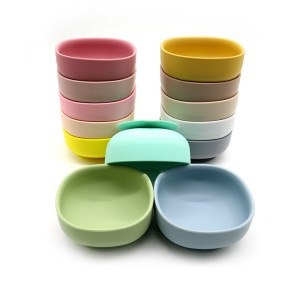
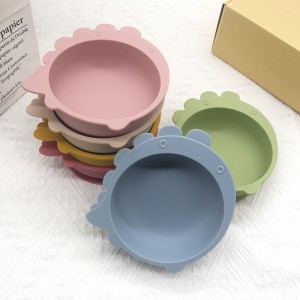
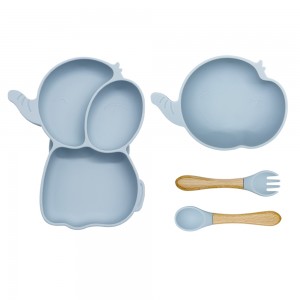
Looking for a Reliable Silicone Baby Bowl Supplier?
Melikey provides food-grade silicone baby feeding products with OEM/ODM customization support, helping brands create safe, functional, and market-ready feeding solutions.
Post time: Aug-01-2026